Technological Neutrality Cannot Be Maintained Without Social Acceptance
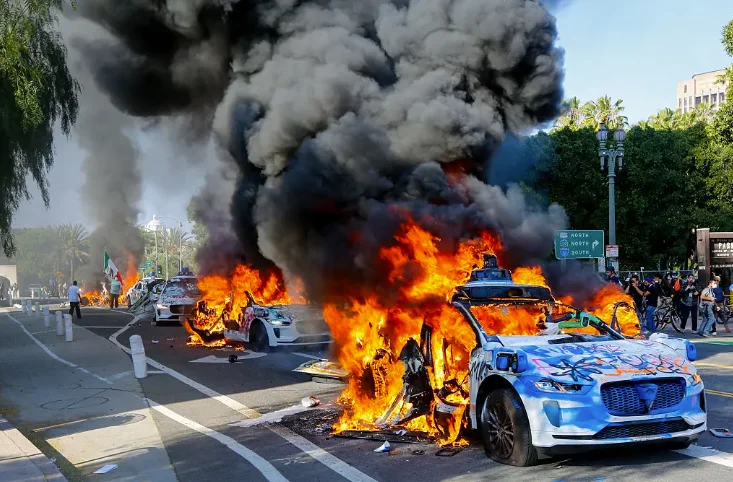
Google's autonomous taxi Waymo recently suspended or reduced operations in Los Angeles, San Francisco, Austin, and other major US cities after at least 5 Waymo vehicles were set on fire during anti-ICE (Immigration and Customs Enforcement) protests in Los Angeles. The incident reveals a critical dynamic in technology deployment: Waymo vehicles, equipped with fixed 360-degree cameras, LiDAR, and sensors, were perceived by protesters not as transportation but as mobile surveillance infrastructure. Protesters reasoned: "While I'm demonstrating, an unmanned car is photographing my face. This is a moving surveillance device." The concern isn't entirely speculative — autonomous vehicle companies have participated in urban administration and public safety data analysis projects. Waymo's response: expanded geofencing; complete suspension in some areas. This exposed the vulnerability of autonomous driving infrastructure to unpredictable social disruption (protests, power outages, civil unrest). Deeper analysis: Waymo vehicles became symbolic targets because they compress multiple social tensions — urban redevelopment and gentrification, automation-driven labor displacement, surveillance infrastructure expansion, and class disconnection from technology benefits. The vehicles were not defective; they were targeted precisely because they functioned perfectly as representatives of technology that many citizens feel they have no power over. Implications for autonomous vehicle deployment: technical safety certification is necessary but insufficient; social legitimacy requires transparent data governance, community engagement, clear limitations on law enforcement data sharing, and demonstration that the technology serves community interests. "What burned was not the vehicles — it was the fracture between technology and society."