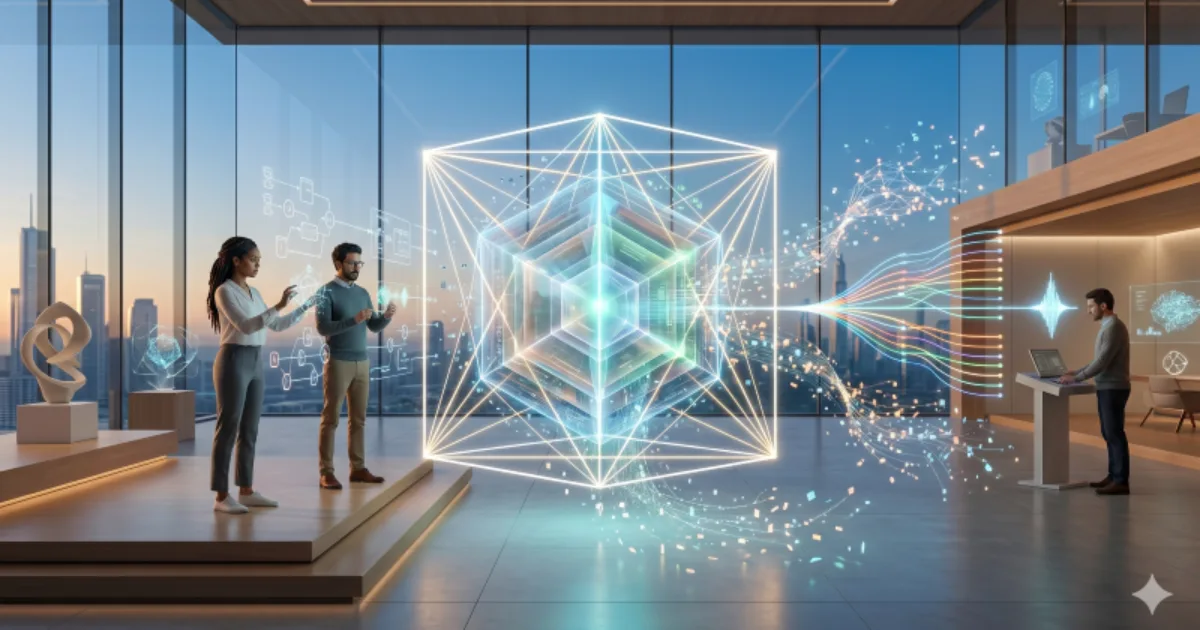
On October 23, 2025, Electronic Arts (EA) announced a strategic partnership with Stability AI (developer of Stable Diffusion) to "Reimagine game development with AI." EA's press release stated: "AI can draft, generate, and analyse — but it can't imagine, empathise, or dream," explicitly positioning human creativity as central. Stability AI: "Together we'll help artists and developers ideate, visualize, and refine gameplay faster and at greater scale." The partnership covers AI-assisted 3D modeling and physically-based rendering (PBR) material generation, enabling concept art iteration in hours rather than weeks; procedural world-building tools generating terrain, vegetation, and environmental details from high-level descriptions; animation and character rigging assistance reducing manual keyframing; and QA automation for detecting visual anomalies and testing edge cases. Key questions the partnership raises: (1) Labor implications — as AI automates previously manual creative tasks, what happens to junior artists, environment artists, and QA testers whose roles are most directly impacted? (2) IP ownership — when AI-generated assets are used in commercial games, ownership questions between EA, Stability AI, and original training data creators remain legally unresolved; (3) Creative direction vs. automation — the partnership's success depends on whether AI tools genuinely augment human creativity or gradually replace it; (4) Industry precedent — EA's scale means this partnership will influence how other major publishers approach AI integration, potentially establishing industry norms for AI's role in game development.
EA × Stability AI — 'Reshaping the Game Production Method'
On October 23, 2025, global game company Electronic Arts (EA) announced a partnership with generative AI company Stability AI to reshape game production methods.
Source: META-X metax.kr
ⓒ META-X metax.kr
All rights reserved.
Free to share with attribution.
All rights reserved.
Free to share with attribution.