The Arrival of a New Play Style That Is Neither Console Nor PC
''Gaming Continues Anywhere.''
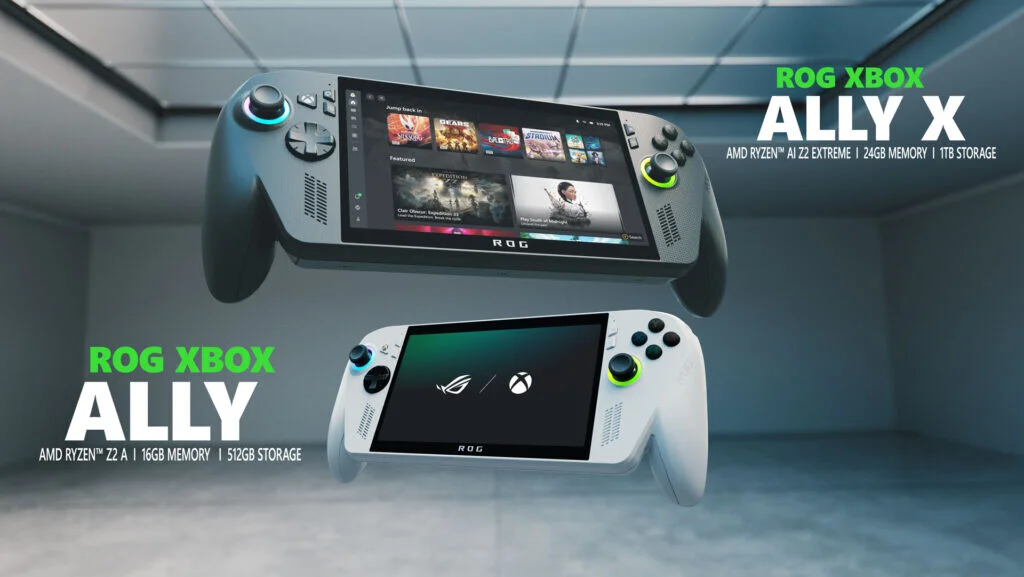
Microsoft entered the handheld gaming platform market on June 9 by unveiling "ROG Xbox Ally" and "Ally X" in collaboration with ASUS, following Nintendo Switch's success and Valve's Steam Deck. The ROG Xbox Ally series combines ASUS's precision hardware design with Xbox's familiar gaming environment for next-generation handheld gaming. Two models: Ally X (high-performance, superior loading speed and multitasking, stable performance during extended use with impulse triggers providing tactile feedback for racing and FPS games); Ally (lighter spec, suitable for users preferring Xbox Game Pass streaming). Hardware: 7-inch FHD 120Hz display; Xbox wireless controller ergonomic grip design providing familiar console feel. Software differentiation: Xbox full-screen interface activates immediately on startup; Xbox Game Pass, cloud gaming, and remote play integrated; Steam, Epic Games, and Battle.net launchable from a single UI — resolving the "launcher switching" friction of existing PC handheld devices. Competitive context: Valve Steam Deck (Linux-based, open platform, 1,200+ native games); other AMD-powered Windows handhelds (Asus ROG Ally non-Xbox, Lenovo Legion Go); Nintendo Switch 2 (dedicated console ecosystem). Microsoft's strategic intent: capture the large installed base of Xbox/PC gamers who want portability without purchasing into a new ecosystem; the Xbox ecosystem integration (Game Pass, cross-save, xCloud) is the differentiator rather than raw hardware performance. The ROG partnership leverages ASUS's expertise building the existing ROG Ally while Xbox provides software/services differentiation, testing whether gaming platform value can migrate from dedicated hardware to cloud-connected portable devices.