Global economic uncertainty is reshaping the art world. While traditional art markets face a sharp transaction cliff due to high interest rates and geopolitical crises, the digital art market is building an independent ecosystem powered by AI and blockchain technology with explosive growth. Traditional market contraction: Art Basel and UBS data shows 2024 global art market total sales of approximately $57.5 billion — down 12% from $65.3 billion in 2023. Artnet analysis: 2025 H1 fine art auction sales of $4.72 billion — down 40.9% from 2022 H1 peak; ultra-high-end transactions (super-rich buyers) down 45% in the same period. Causes: prolonged high interest rates reducing art investment attractiveness; China market weakness (2024 Chinese art market revenue hit lowest since 2009, ceding 2nd place to UK); geopolitical instability (Russia-Ukraine, Middle East) closing galleries and canceling art fairs. Digital art renaissance: digital art market projected at 14.2% CAGR through 2030; AI-generated art gaining institutional recognition (Christie''s, Sotheby''s holding dedicated digital art sales); NFT market recovering from 2022-2023 trough with more utility-focused applications; generative AI making professional-quality digital art accessible to broader creator base. The structural divergence — traditional art contracting while digital expands — represents not just a market trend but a fundamental shift in what constitutes "valuable" art and who the relevant audience, creators, and institutions are.
Traditional Crisis vs. Digital Opportunity: Starkly Divided 2025 Global Art Market
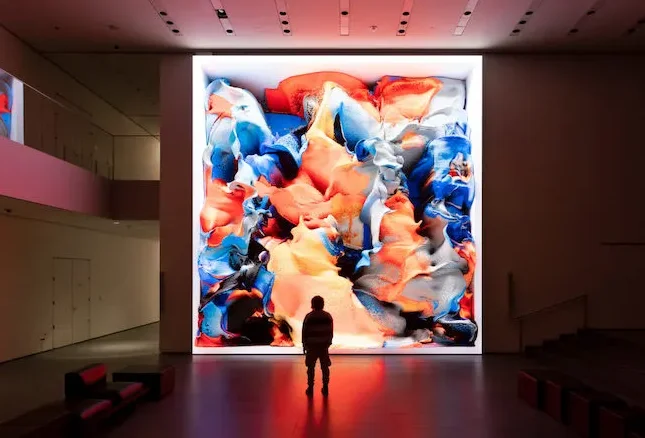
Global economic uncertainty is shaking the art world. Traditional art markets face sharp transaction cliffs from high interest rates and geopolitical crises, while digital art markets are driven by AI and blockchain.
Source: META-X metax.kr
ⓒ META-X metax.kr
All rights reserved.
Free to share with attribution.
All rights reserved.
Free to share with attribution.