From IMO Gold Medal to Physics Formula Verification — AI Pushes into Frontier Research Territory
OpenAI is rapidly expanding the domain of AI's research capabilities.
Following its achievements in mathematical proofs, OpenAI has begun advancing into physics research, raising fundamental questions about the potential role of AI as a "research partner."
OpenAI recently disclosed that physics formula candidates proposed by the GPT-5.2 series model are being verified through an internal reasoning model, and that researchers are confirming the results in sequence. This is a structure where AI does not merely solve given problems, but proposes new formulas or hypotheses — and other AI models and human researchers verify them together.
This flow is connected to OpenAI's IMO (International Mathematical Olympiad) gold medal level performance announced in 2025. At that time, the model demonstrated the ability to maintain complex logical structures and reason over extended periods at research-grade difficulty. The current physics formula verification is a natural extension of this long-form reasoning capability into the scientific domain.
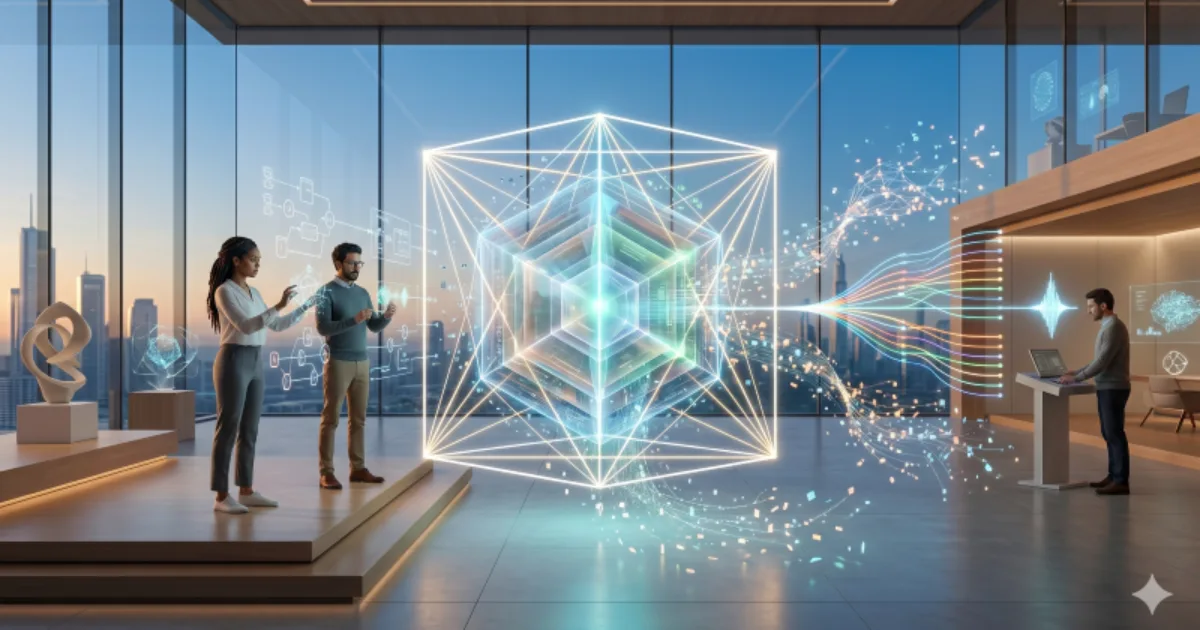
What is particularly noteworthy is that the process consists of multiple stages: AI proposition → AI verification → human researcher confirmation. This structure goes beyond simple question-answering and is attempting a collaborative research model that actually participates in the scientific discovery process. OpenAI positions this as part of a strategy to expand AI's role as a "research accelerator."
Of course, limitations exist. The possibility that AI-generated formulas or proofs contain subtle errors cannot be ruled out. The case where proofs initially evaluated as correct were found to have errors in the "First Proof" challenge is a representative example. For this reason, the role of human experts in the final verification stage is essential.
Nevertheless, this experiment carries significant implications. AI is beginning to participate not simply as a tool for finding answers to given problems, but in the process of forming new scientific questions. This signals that the boundary between AI's role and the role of researchers is beginning to blur.
Future research communities will likely increasingly adopt structures where AI proposes hypotheses, human researchers evaluate them, and AI again verifies and refines them. In this collaborative research model, the position of AI is no longer that of a calculator, but of a partner that participates in scientific reasoning itself.