The WoW Killers Failed to Kill WoW
The WoW killers failed to kill WoW.
Warhammer Online could not live up to expectations. SWTOR survived commercially, but it did not surpass WoW. WildStar revealed the market limits of hardcore design, and New World showed that capital and infrastructure alone cannot create a living world.
So, is MMORPG over?
No.
What ended was not the MMORPG genre itself, but the belief that every MMORPG had to become like WoW.
At one time, the industry looked toward a single throne. Who would surpass WoW? Who would build a larger world and gather more players? But over time, the question changed. What matters now is not killing WoW. It is how to create a world where people want to stay together again.
MMORPG has not disappeared. It simply no longer runs toward one single answer. Some games have revived the inconveniences of the past. Some have rebuilt failed worlds. Some have shaken the global market through action and live service operation. Some are trying to rewrite old monetization formulas. And some have not yet arrived, but are already preparing the next question.
The Return of a Lost Sensation — WoW Classic
In August 2019, Blizzard released World of Warcraft Classic. WoW Classic was not an entirely new game. It was a restored version of the 2004 WoW, the so-called “vanilla WoW” before the first expansion. Its global release date was August 26, 2019, though in some regions it was listed as August 27 due to time zone differences. The game was offered to existing WoW subscribers at no additional cost.
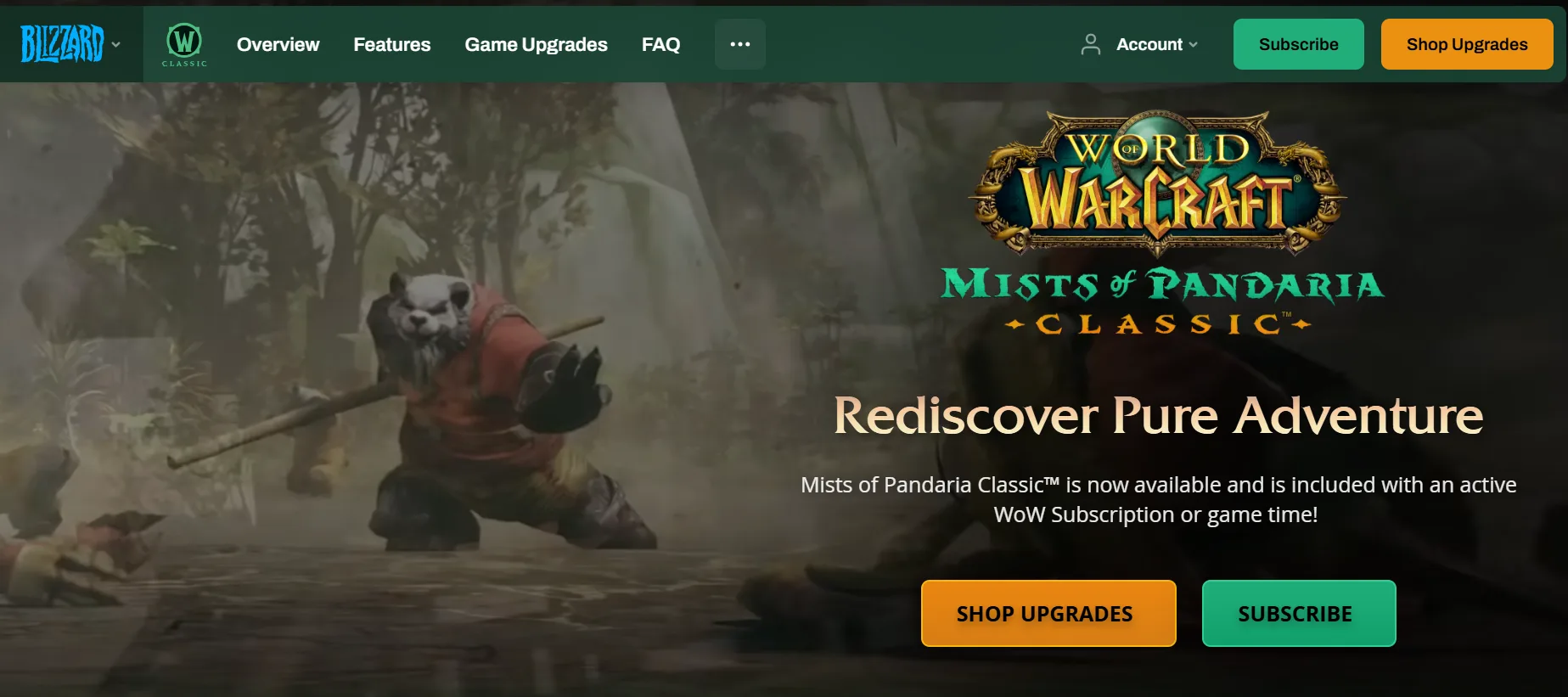
What was interesting was the response. WoW Classic looked like a simple nostalgia product, but on launch day it drew more than 1.1 million concurrent viewers on Twitch. According to reports at the time, WoW Classic’s peak concurrent Twitch viewership reached about 1.16 million, and more than 6.1 million unique viewers watched streams during the first 24 hours.
It is difficult to explain this phenomenon as nostalgia alone. Of course, nostalgia was powerful. For those who first walked through Azeroth in 2004, WoW Classic was a world connected to their youth. But what mattered more was that they were not simply longing for old graphics or old skill structures.
What they wanted again was a slower world.
Modern MMORPGs have become increasingly convenient. Automatic matchmaking finds parties for players, quest routes are organized on the map, and fast travel and repeated rewards save users’ time. But in that process, certain experiences faded away: the inconvenience of having to talk to strangers, the time spent waiting to form a party, the conversations that emerged while traveling together to a dungeon, and the sense of growth that came from spending days just to gain one level. Older MMORPGs built relationships through these inefficiencies.
The popularity of WoW Classic revealed exactly this point. The value of MMORPG does not necessarily lie only in fast growth and convenient rewards. Sometimes, travel distances that cannot be easily skipped, quests that are difficult to clear alone, and dungeons that require someone else’s help make the world feel thicker. Systemically, they may be inefficient. Experientially, however, they were devices that made the world feel alive.
That is why WoW Classic was not merely retro. It was a kind of counter-question: while we gained convenience, what did MMORPG lose?
What people wanted again was not simply a familiar system, but the sense of relationship and the weight of the world that such systems had once created.
A World Reborn, Trust Tested Again — Final Fantasy XIV
If WoW Classic is a case of reviving a lost sensation, Final Fantasy XIV is a case that shows even a failed world can be reborn.
The beginning of Final Fantasy XIV was far from successful. The original version, released in 2010, received harsh criticism for its controls, interface, content structure, optimization, and many other problems. Square Enix eventually decided not merely to fix the game, but to remake the world itself. The original version was brought to an end in 2012, and in effect, the game was relaunched on August 27, 2013, under the title A Realm Reborn.
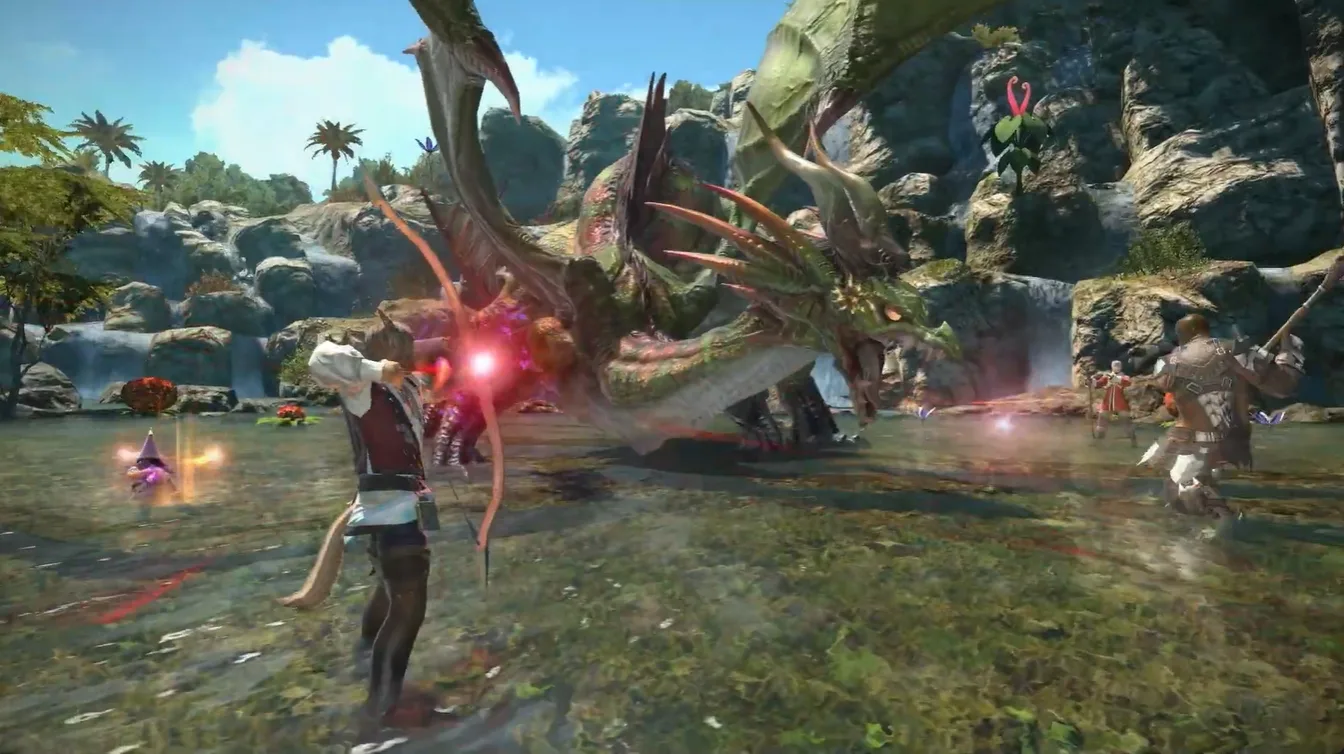
This was a risky decision. In online games, first impressions can be fatal. Once a game fails, it is difficult to persuade users to return. This is especially true for MMORPGs. People are not simply buying a game; they are entrusting their time to it. They grow characters, collect equipment, join guilds, and build relationships. In such a genre, losing trust is much heavier than receiving bad reviews.
Fortunately, Final Fantasy XIV regained that trust. After A Realm Reborn, Final Fantasy XIV grew through steady updates and expansions, establishing itself as one of the representative modern MMORPGs through Heavensward, Stormblood, Shadowbringers, and Endwalker. In particular, during the Endwalker period, demand became so high that server congestion continued for an extended time, and Square Enix even temporarily suspended new sales.
However, the revival of Final Fantasy XIV is not a simple story of “even a failed game can be fixed.” In MMORPGs, trust is not easily recovered once it collapses. FFXIV remade the game, changed the language of operation, and endured that period by having the developers stand directly in front of the community. Rebuilding a world was not simply about adding content. It was about creating an environment where users could once again entrust their time.
The 2024 expansion Dawntrail became a new test. Dawntrail began early access on June 28, 2024, and officially launched on July 2. It carried the meaning of a graphical update and the beginning of a new adventure, but the response was not as consistently enthusiastic as it had been for previous expansions. Steam reviews and community reactions continued to criticize the story and content structure.
Of course, this point should not be exaggerated. Final Fantasy XIV remains a major MMORPG, and as of 2024 it had surpassed 30 million registered users. Still, the debate after Dawntrail shows one thing clearly. Even a world that has been revived is not safe forever. In MMORPGs, trust must be proven again with every expansion.
For that reason, the history of Final Fantasy XIV is double-sided.
A failed world can be reborn, but even a reborn world must continue to prove itself.
he Success of Content, the Fracture of Operational Economy — Lost Ark
When discussing the modern possibilities of Korean MMORPGs, it is difficult to leave out Lost Ark. Lost Ark chose a direction different from traditional tab-targeting MMORPGs. Its quarter-view action, fast combat, spectacular boss fights, vast amount of content, and director-centered direct communication showed that Korean online RPGs could also gain strong reactions in the global market.
Its global launch performance in 2022 was especially impressive. Amazon Games announced that Lost Ark reached a peak of roughly 1.325 million concurrent players on Steam within 24 hours of its Western release, placing it at number two in Steam’s all-time concurrent player rankings at the time. According to SteamDB, Lost Ark’s all-time peak concurrent player count was 1,325,305 on February 12, 2022.
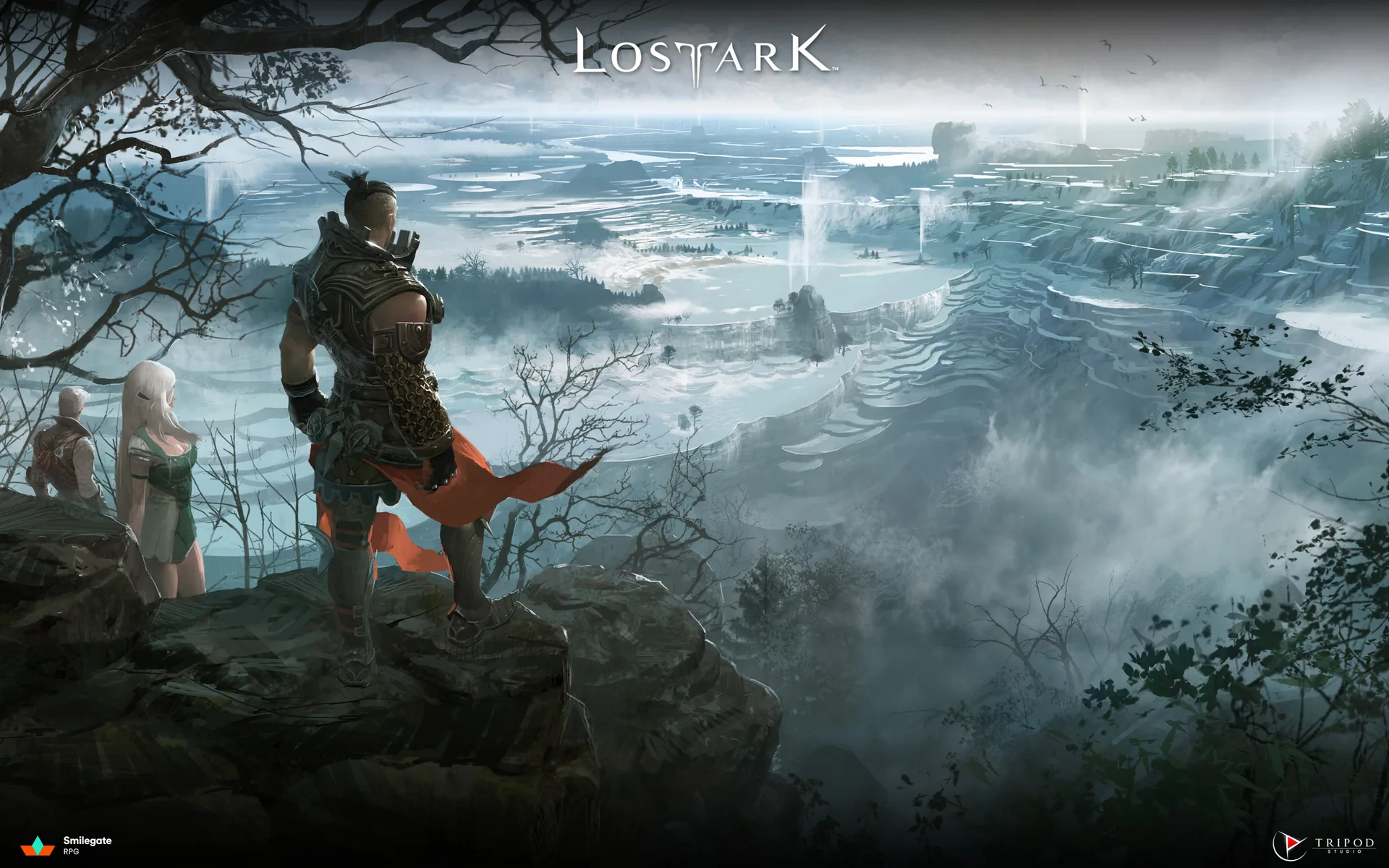
This number was not just a momentary buzz. Lost Ark showed the possibility that Korean MMORPGs were no longer confined to the domestic market. At a time when the term “K-MMORPG” was often mentioned alongside fatigue over monetization structures and repetitive progression, Lost Ark created a different image through its action, boss fights, content volume, and operational communication. At least for a while, Lost Ark represented the expectation that “Korean games can stand at the center of the global MMORPG market.”
But the success of an MMORPG does not end with launch-day concurrent players.
In fact, the real test begins after that.
The most important issue Lost Ark revealed was operational economy. An MMORPG cannot be sustained by content volume alone. Reward structures, currency value, growth costs, bot countermeasures, entry barriers, and endgame fatigue are all connected. Users do not simply evaluate one dungeon. They evaluate what value their invested time holds within the world.
Lost Ark achieved great success after its global launch, but over time it could not avoid debates over user decline, progression fatigue, and economic structure. According to SteamDB, its current concurrent player scale has fallen to a level that cannot be compared with its launch period, and in Western markets, reforms to reduce the burden of progression have been repeated. Since 2025, the decline in Lost Ark revenue has also been mentioned as one of the key variables in Smilegate Group’s performance. According to Smilegate’s official financial status, the group recorded 1.4365 trillion won in revenue and 359.8 billion won in operating profit in 2025, both down from the previous year. Reports cited declining revenue from major IPs and investment costs for new titles as factors behind the performance drop.
Lost Ark is not a failed game. It is a case that proved Korean MMORPGs can create major global success. At the same time, it also showed that good content and strong action alone cannot guarantee long-term survival.
In MMORPGs, what ultimately determines long-term survival is the persuasiveness of operation and economy. If a game cannot regulate its economy, manage progression fatigue, and reduce the gap between new and existing users, the value of the time users have accumulated will also be shaken.
This is where the meaning of Lost Ark lies. Content can open a world, but what maintains that world is trust in operation and economy.
The Next Experiment Beyond the Old Monetization Formula — AION 2
When discussing the future of MMORPGs, the most sensitive question in the Korean market ultimately leads to monetization. Korean MMORPGs have long grown alongside intense progression competition, equipment value, trading, enhancement, and high-spending structures. This structure generated enormous revenue, but it also increased fatigue and distrust toward the genre. In particular, the phrase “Lineage-style business model” came to symbolize both the achievements and limits of Korean MMORPGs.
In that sense, AION 2 is an interesting experiment.
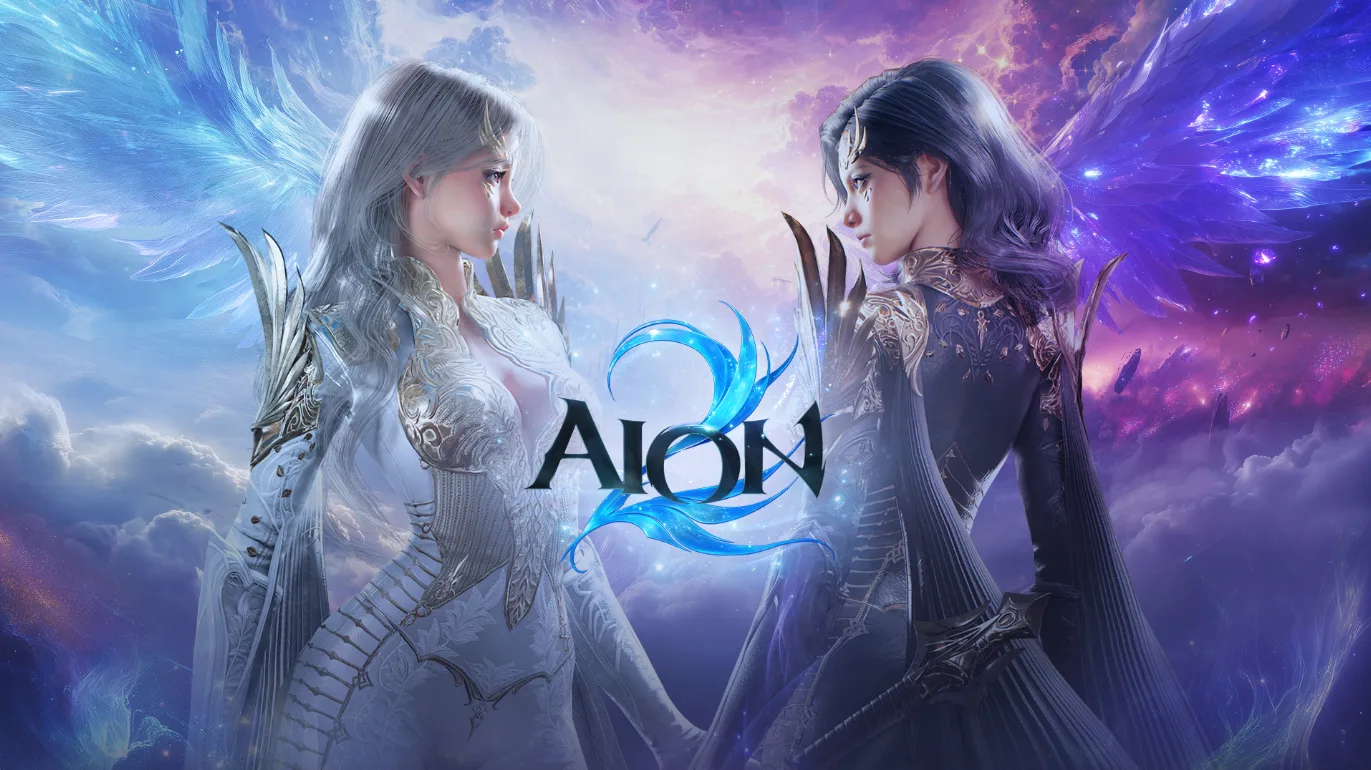
NCSoft presented AION 2 as the official sequel to the original AION and developed it as a large-scale MMORPG based on Unreal Engine 5. On its global Steam page, AION 2 emphasizes that it offers a world 36 times larger than the original and an MMORPG experience where the sky becomes a battlefield.
But the more important point is its business model. In pre-release reports and public information, AION 2 was introduced as a game that excludes randomized gacha products and designs its revenue structure around memberships and battle passes. In an official livestream in August 2025, NCSoft also revealed that the trading system would be based on in-game currency rather than premium currency.
Its early performance was also strong. In an official press release on January 7, 2026, NCSoft announced that AION 2 had surpassed 100 billion won in cumulative revenue within 46 days of launch, and that the number of characters that purchased memberships had exceeded one million. This shows that, at least in the early market, AION 2 achieved considerable success.
However, early revenue alone cannot determine success. The success of an MMORPG is not judged in 46 days. Even a membership- and battle pass-centered model can be evaluated differently depending on how users experience it. In fact, overseas communities and MMO media continued to debate the structure and price of AION 2’s battle pass, as well as the monetization of convenience features.
Even so, the reason AION 2 matters is clear. This game stands on the reality that Korean MMORPGs can no longer gain long-term trust through old monetization formulas alone. In a situation where fatigue over gacha and stat-based monetization has grown, the fact that NCSoft foregrounded a different revenue structure through AION 2 is itself a change.
AION 2’s early success is not a completed answer, but it shows that Korean MMORPGs can begin another major experiment outside the Lineage-style formula.
Not Surpassing WoW, but Asking How to Build a Different World — Guild Wars 3
Although it has not yet arrived, Guild Wars 3 is a fitting name with which to conclude this flow. The reason is simple. From the beginning, the Guild Wars series walked a different path from WoW.
Released in 2005, Guild Wars did not require a monthly subscription. Considering that monthly subscriptions were the standard formula for MMORPGs at the time, this was a bold choice. Guild Wars 2 also experimented with structures different from traditional quest-centered MMORPGs. Field events, horizontal progression, a no-subscription model, and relatively low gear gaps all raised the question: “Must MMORPGs necessarily follow WoW-style progression and subscription models?”
That is why news of Guild Wars 3 carries a meaning beyond simple anticipation for a sequel. When the development of Guild Wars 3 was mentioned at NCSoft’s 2024 shareholders’ meeting, the MMO community reacted strongly. However, since ArenaNet has not yet made an official announcement, it is safer at this point to view it as a next project whose development possibility has been publicly mentioned.
Despite this uncertainty, Guild Wars 3 matters because its name symbolizes the next question for MMORPGs. What new MMORPGs need now is not merely a larger world, more quests, or flashier raids. What matters is designing a world in a different way.
It is still unknown what form Guild Wars 3 will take. But the important point is that it does not need to become “the new WoW.”
Rather, what is needed now is a different question.
Can people contribute to a world together without having to invest an enormous amount of time?
Can monetization, progression, equipment, and community be designed in a way that does not damage the trust of the world?
The reason Guild Wars 3 is anticipated is not because it may surpass WoW. The more important reason is that it may become an opportunity to ask again about the future of MMORPGs in a way different from WoW.
Only the Age of the Throne Has Ended
MMORPG once ran toward the throne called WoW. But as time passed, it became clear that the goal of killing WoW itself may have been the wrong question.
WoW Classic, FFXIV, Lost Ark, AION 2, and Guild Wars 3 each point in different directions. Yet the question these cases indicate converges into one. What matters now is not who will kill WoW, but what kind of world can make people want to stay together again.
Not a larger map, but a space where more relationships can emerge.
Not stronger rewards, but a structure where meaning deepens as time accumulates.
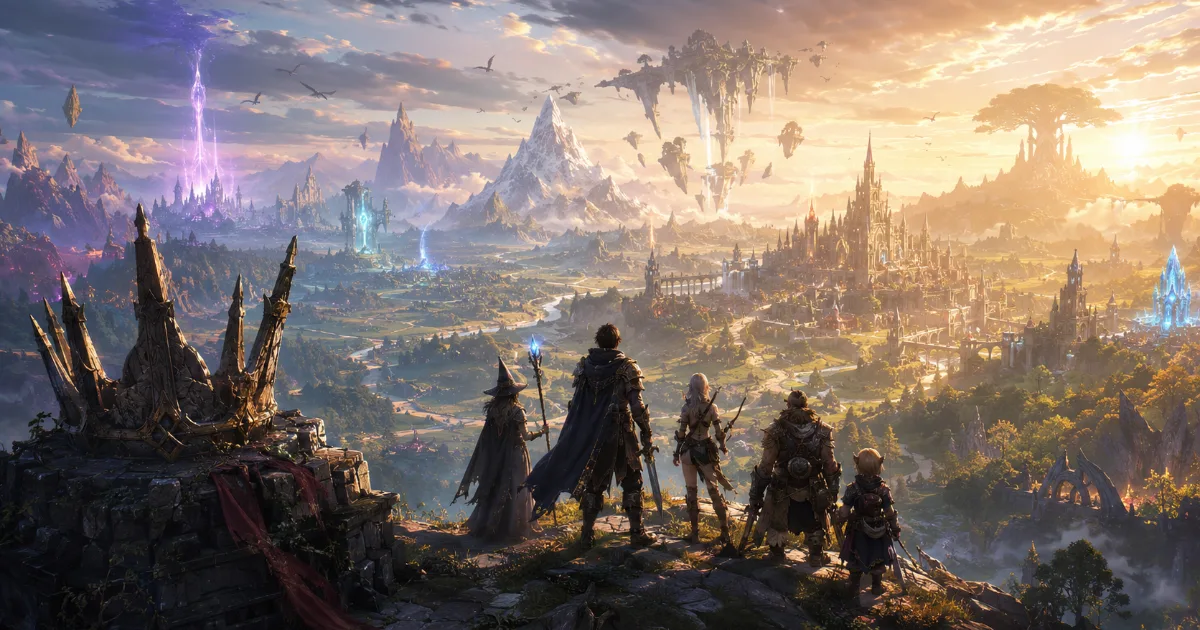
MMORPG is not dead.
Only the age in which everyone ran toward a single throne has ended.
The future of MMORPG will no longer branch from one correct answer, but from multiple ways of surviving. Some worlds will survive through nostalgia, some through narrative, some through action, some through operational trust, and some through new monetization structures.
And in the end, one question remains.
How do we create a world where people want to stay together again?