Amazon Case Expected to Have Significant Ripple Effects Domestically
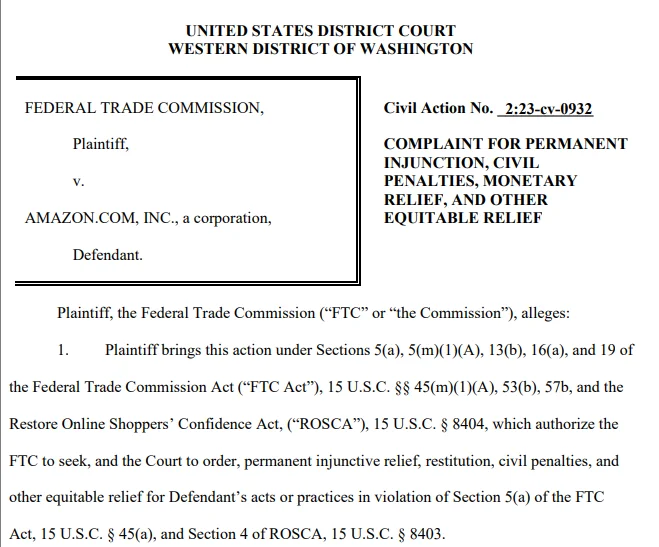
The FTC''s lawsuit against Amazon has reached a new phase. The core: Amazon violated the Restore Online Shoppers'' Confidence Act (ROSCA) by signing up consumers for Prime membership without consent and intentionally designing the cancellation process to be difficult. This case is evaluated as symbolizing the collision between global big tech''s subscription economy model and consumer rights protection.
ROSCA (enacted 2010) mandates: clear disclosure, prior consumer consent, and simple cancellation procedures for automatic payment-based services. FTC''s indictment alleges Amazon violated all three obligations: a prominent "Prime free trial" button was placed where consumers simply selected free shipping options, with automatic paid conversion occurring without separate consent procedures; cancelling required multiple clicks and surveys, with some users unable to find the cancellation path at all. This is a classic example of "dark patterns" — using users'' cognitive biases to guide choices favorable to the company. It shows UI/UX design is not just a design issue but an area colliding with legal regulation.
The Amazon case is not just one company''s problem. Netflix, Disney+, Spotify, and other global subscription platforms use automatic payment systems as core revenue sources, with "raising cancellation barriers" being a strategy implicitly used across the industry. The FTC''s lawsuit signals a warning to the subscription economy broadly. The EU has also begun regulating online platform dark patterns since 2022 through the Digital Services Act and Consumer Rights Directive. Korea''s Fair Trade Commission has also mandated simplified online automatic payment cancellation procedures.
If FTC wins, Amazon could face tens of billions in fines and service structure adjustment pressure. More importantly, subscription economy design principles could change across the global platform industry — companies not strengthening transparency and trustworthiness over "lock-in" strategies face legal and social resistance. The question: "When corporate lock-in strategies infringe consumer rights, how far should regulation intervene?" — Amazon''s case could become the starting shot for reorganizing global digital economic order.