On September 29, 2025, a consortium led by Silver Lake, Saudi Arabia's Public Investment Fund (PIF), and Affinity Partners (led by Jared Kushner) officially announced acquisition of 100% of Electronic Arts (EA) for $55 billion ($210 per share) — the largest leveraged buyout (LBO) in gaming industry history, taking EA private after 36 years on NASDAQ. EA's stable cash flow from long-running live service titles (EA Sports FC, Apex Legends, The Sims) made this transaction viable. The privatization raises fundamental questions about gaming's relationship with public markets: advantages gained include freedom from quarterly earnings pressure enabling longer investment horizons; reduced pressure to maximize short-term profitability over product quality; and ability to make bold strategic bets without public market scrutiny. Potential risks: LBO structure requires EA to service acquisition debt from future revenues, creating new financial constraints; private equity ownership prioritizes returns within a defined investment horizon (typically 5-7 years), potentially leading to asset monetization rather than long-term investment; and the involvement of Saudi PIF raises questions about governance, editorial independence, and the use of sports/gaming investment as "sportswashing" or geopolitical influence tools. The broader context: EA's delisting arrives alongside Saudi PIF's aggressive gaming industry investment (Esports World Cup, EA acquisition, stakes in Nintendo, Activision, EA, Take-Two, Capcom, Nexon, NCsoft), transforming gaming from creative industry to strategic geopolitical asset. The question for the industry: will privatization allow EA to invest in risky, creative games free from shareholder pressure, or will the debt burden and private equity logic drive consolidation around proven franchises and microtransaction optimization?
EA Goes Private — End of Innovation or Beginning of Freedom?
The paradigm shift in the gaming industry hidden behind the $55 billion delisting. EA, the gaming giant, leaves the market. Electronic Arts, which has been on Nasdaq for 36 years, is finally leaving the stock market.
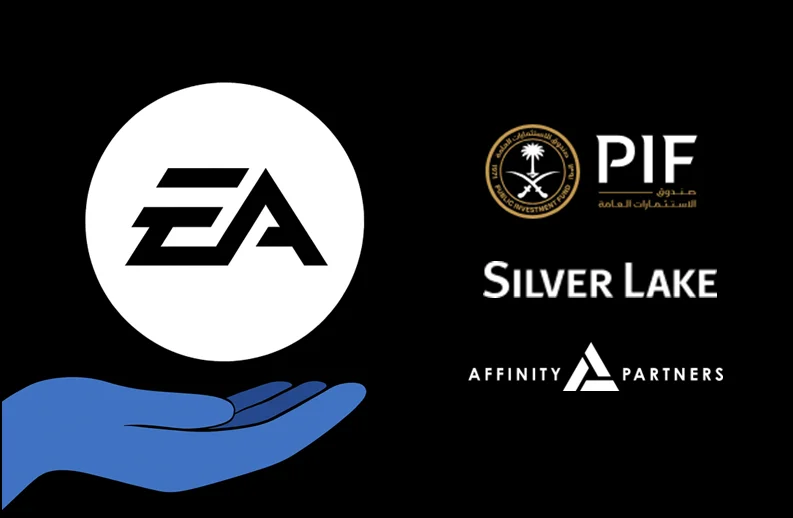
Source: META-X metax.kr
The Paradigm Shift in the Gaming Industry Hidden Behind a $55 Billion Acquisition
ⓒ META-X metax.kr
All rights reserved.
Free to share with attribution.
All rights reserved.
Free to share with attribution.