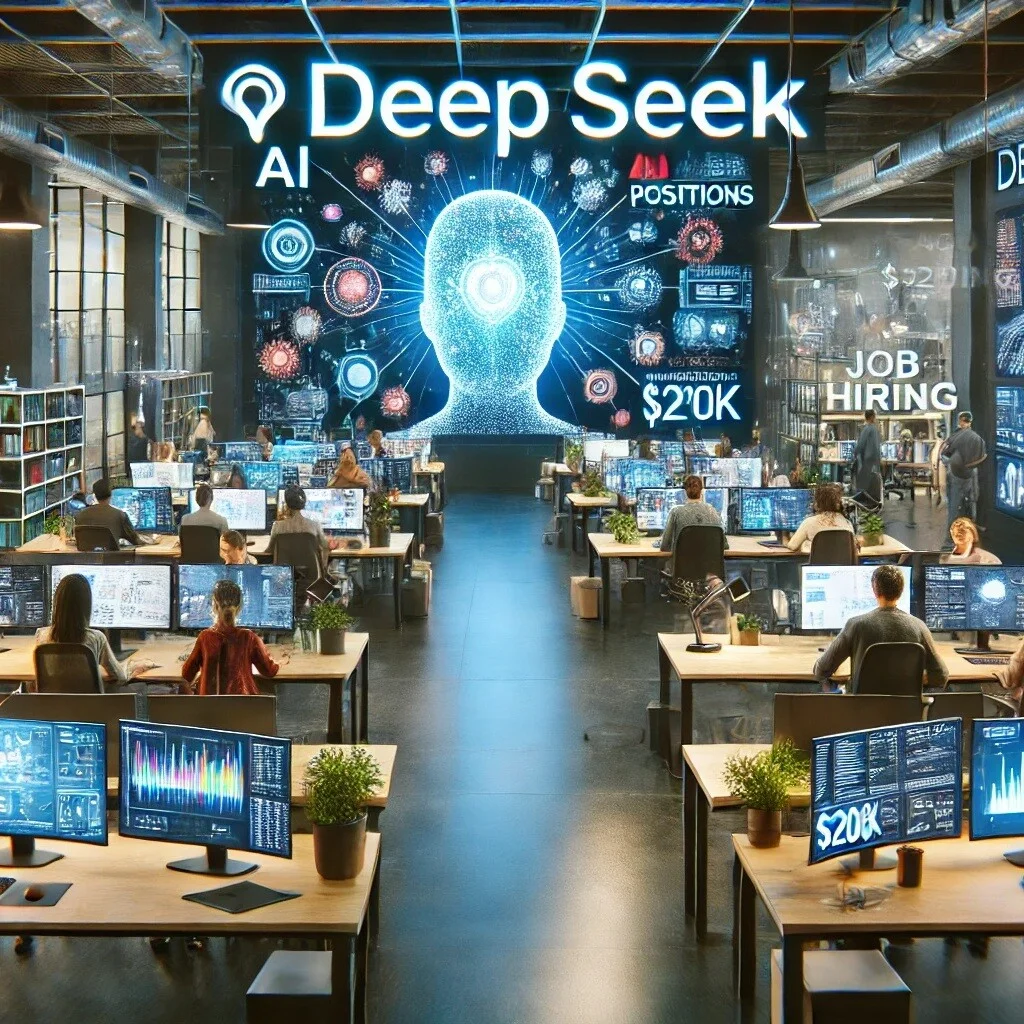
While Chinese AI startup DeepSeek is facing security controversies, it has been formally initiating AI talent recruitment competition. Domestic government ministries and major companies have implemented DeepSeek access restriction measures citing security concerns. This DeepSeek regulatory movement is not only a Korea issue -- regulatory movements against DeepSeek are spreading globally in Japan, Australia, the US, and other countries. However, DeepSeek is pressing harder on global expansion including aggressively recruiting global AI talent with salaries of approximately 300 million KRW -- suggesting that government regulations and responses in each country will govern future market flows. According to IT industry and government officials on the 6th, the Ministry of National Defense, Ministry of Foreign Affairs, and Ministry of Trade, Industry and Energy blocked DeepSeek access on some work PCs based on their own judgment. The security concern basis: DeepSeek requires users to agree to terms allowing data to be stored on servers in China; for government and corporate users handling sensitive information, this creates data exfiltration risk; the model was also found to have insufficient guardrails preventing harmful content generation in some testing; the rapid emergence of DeepSeek (released January 2025, immediately comparable to GPT-4 class performance at dramatically lower cost) raised questions about whether security review was adequate before widespread adoption. The game-changer dimension: DeepSeek R1 demonstrated that frontier AI capability can be achieved at a fraction of the compute cost assumed by US AI labs; this challenges the assumption that massive capital investment is the primary barrier to AI development; the implications for AI competitive dynamics, chip export controls, and AI investment valuations are being actively reassessed globally.
Government and Companies Ban 'DeepSeek' — DeepSeek Emerges as New Game Changer
[Korean article] 정부·기업, ‘딥시크’ 금지령...딥시크, 새로운 게임체인저로 부상
Source: META-X metax.kr
ⓒ META-X metax.kr
All rights reserved.
Free to share with attribution.
All rights reserved.
Free to share with attribution.