Public Domain is a system allowing free use of images, texts, and artworks whose copyright protection period has expired. But one question remains: "If such freedom erases creators and enriches platforms, what ethics should we hold?"
The law may have ended, but ethics are just beginning. Public domain content may be legally free from copyright protection, but this doesn't mean it can be used carelessly. Korean Copyright Act Article 14(2) states: "Even after the author's death, use of the work should be in a manner that would not have infringed personality rights during their lifetime." While legal protection has ended, minimum respect for creators and courtesy toward cultural context remains valid.
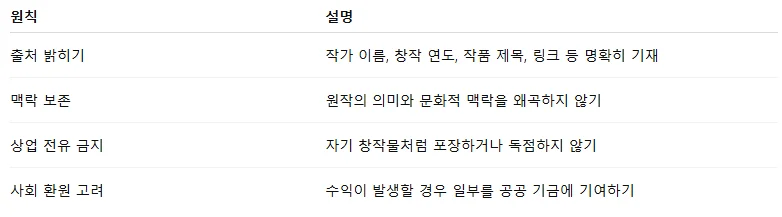
Four ethical principles for public domain use: (1) Attribute the creator — cite the artist name, creation year, and cultural context; (2) Maintain contextual integrity — don't strip historical and aesthetic meaning; (3) Return to the public when profiting — those who gain economically from public domain should contribute back through cultural funds or archive support; (4) Share ethically — don't use for hate speech, political distortion, or harmful purposes. Cultural institutions must present not just "what you can do" but "what you should do."
The Metropolitan Museum's Open Access policy provides high-resolution images freely while recommending attribution and cultural context. Korea's "Gongongnuri" system similarly categorizes terms of use. Four policy proposals for protecting the commons: automatic attribution metadata systems, public domain ethics guidelines, public cultural fund contributions from commercial use, and embedding sharing ethics into Web3 and AI design. Public domain is everyone's "cultural commons" — it can only survive on ethical common ground, not just legal freedom. "Responsible sharing is true freedom."