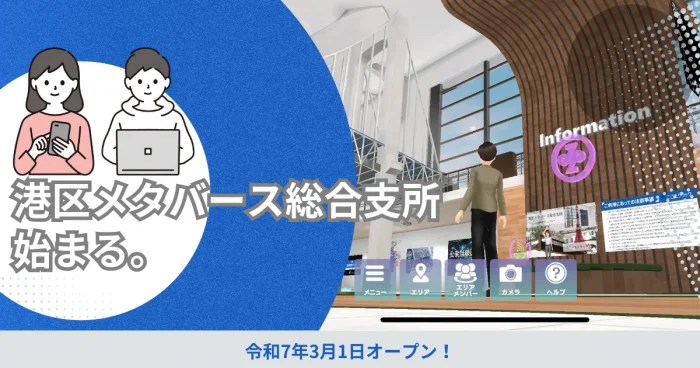
March 2025: Tokyo Minato Ward officially opened the "Minato Ward Metaverse General Branch Office." Citizens can now access virtual space to process civil complaints and receive consultations without visiting the actual ward office. This experiment by Minato Ward focusing on "small and clear purpose" raises again the essential question that Seoul city large-scale project "Metaverse Seoul" missed: "Why should citizens enter the metaverse?" Minato Ward showed not what to "display" but what to "help." Minato Ward treats metaverse not as a 3D promotional venue where avatars wander around, but as a genuine alternative administrative space. The practical design: citizens can enter a virtual ward office through a smartphone or PC browser (no VR headset required); virtual staff avatars (operated by real civil servants) answer questions and guide through procedures; common services available include consultation scheduling, permit application guidance, and information provision; the interface is deliberately simple (2D avatar-based rather than photorealistic 3D) to minimize the technical barrier to access. Why this works where Metaverse Seoul did not: Minato Ward started with a specific problem (elderly and physically limited citizens struggling to visit ward offices) and designed a metaverse solution for that specific problem; Metaverse Seoul started with the technology and sought use cases afterward; purpose-first design creates genuine user value; technology-first design creates impressive demonstrations that people visit once. The accessibility advantage: the virtual ward office is available 24/7 (unlike physical offices); accessible from anywhere with internet; particularly valuable for residents with mobility limitations, working hours conflicts, or who live far from ward offices; the real-world utility creates repeat visits unlike entertainment metaverse applications. The scalability lesson: Minato Ward model can be replicated by any municipality with a browser-based virtual environment and willingness to staff it with real civil servants during operating hours; the technology investment is modest compared to full immersive VR; the organizational investment (training staff to operate in virtual environment, redesigning service workflows) is the real challenge.
Why Did Japan's Minato Ward Make Metaverse Into a Ward Office?
Japan's Minato Ward transformed part of its ward office services into a metaverse, making government services accessible in virtual space.
Source: META-X metax.kr
"Showpiece" Metaverse Is Over... Practical Solutions Seen Through Minato City Case
ⓒ META-X metax.kr
All rights reserved.
Free to share with attribution.
All rights reserved.
Free to share with attribution.