GPUs Are Used for Both Training and Inference
Price, Supply, Export Controls -- Practical Constraints Also Exist
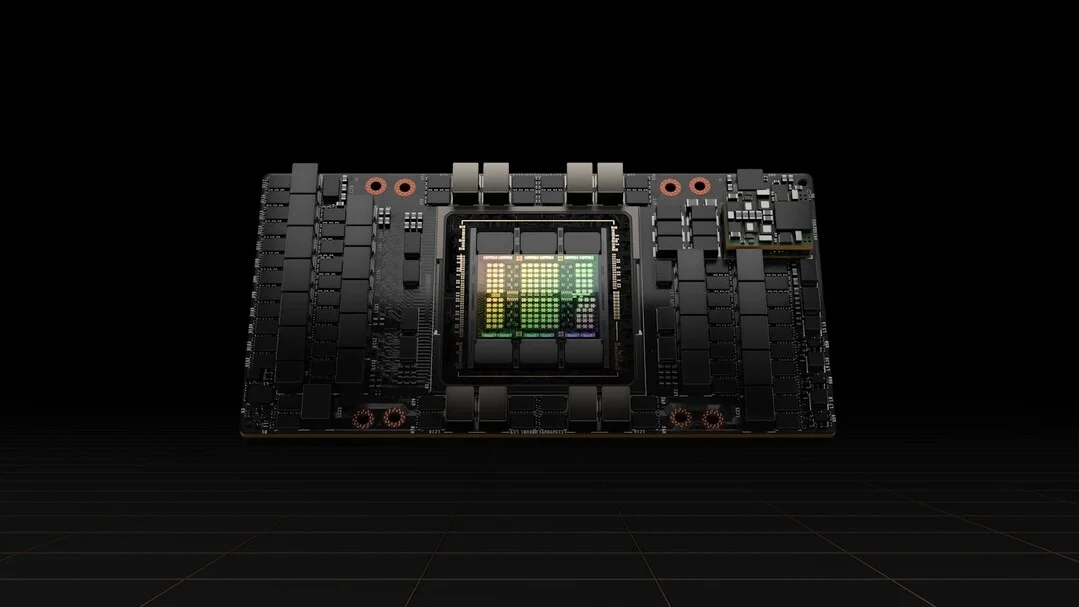
Today AI is transforming all areas of education from classroom teaching methods to digital textbooks and personalized tutoring systems. At the center is NVIDIA AI semiconductor chips. Terms like "GPU," "H100," and "Tensor Core" are unfamiliar to education practitioners and students. What are the NVIDIA chips used for AI, why are they important, and how do they connect to the education field? GPU vs CPU: ordinary computers operate based on CPU (Central Processing Unit) -- optimal for logical computation and system operation but limited in handling many simultaneous tasks. AI needs to rapidly analyze and learn from massive data based on images, language, and video -- this complex large-scale computation is better handled by GPU (Graphics Processing Unit), which specializes in "parallel computation" processing multiple tasks simultaneously. Key NVIDIA AI chip models: H100 (flagship data center training chip, 80GB HBM3 memory, used in major AI lab training runs); A100 (previous generation, still widely deployed); L40S (inference-optimized for deployment); RTX 4090 (consumer/prosumer grade for smaller-scale training and inference). Why NVIDIA dominates: CUDA software ecosystem (15 years of optimization, most AI frameworks default to CUDA); NVLink interconnect for multi-GPU scaling; HBM (High Bandwidth Memory) enabling large model fits in memory; the combination of hardware + software ecosystem creates switching costs that AMD and Intel are still working to overcome. Education applications: AI tutoring systems require inference chips (not full training scale); a single A100 or H100 can serve thousands of simultaneous student AI interactions; the cost per student interaction has dropped dramatically as inference efficiency improves.