Simultaneously Facing Convenience and Dangers of Browser-Based AI
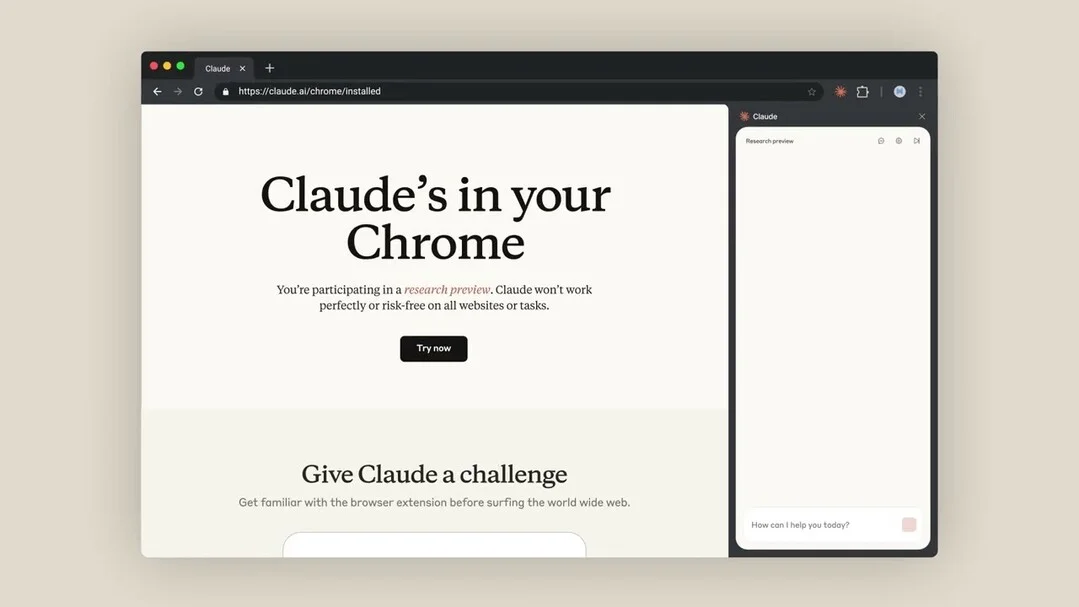
Anthropic unveiled a pilot version of "Claude for Chrome" operating directly in the Chrome browser -- bringing closer an era where AI reads web pages, clicks buttons, and fills forms performing actual browser actions. Test timeline: started with a small number of users in August, expanded to all Max plan subscribers from November. Anthropic evaluated that browser-based AI can significantly improve work efficiency while clearly stating it simultaneously introduces new forms of security risks. Confirmed capabilities: over recent months Anthropic confirmed Claude successfully performing various tasks in the browser including calendar management, email writing, expense processing, and web feature testing. The prompt injection risk: Anthropic explained that AI acting directly in the browser may be exposed to greater risks than existing chat-type AI, with "prompt injection" as the most important threat -- web pages containing malicious instructions in text that AI reads and incorrectly follows. Anthropic safety measures: "computer use" guidelines only executed when explicitly authorized; confirmation required before executing potentially irreversible actions; minimizing sensitive data collection by default. Why this matters: Claude for Chrome is among the first mainstream browser AI agents from a major AI lab -- the pilot is testing both the technical capability and the safety frameworks needed for AI that can take consequential actions on behalf of users (submitting forms, making purchases, sending emails) rather than just providing information. The agentic AI transition: this marks a significant shift from AI as "advisor" to AI as "actor" in user workflows -- with corresponding expansion of both utility and potential for harm if the safety mechanisms fail.