A Warning to Non-Native Students and Teachers
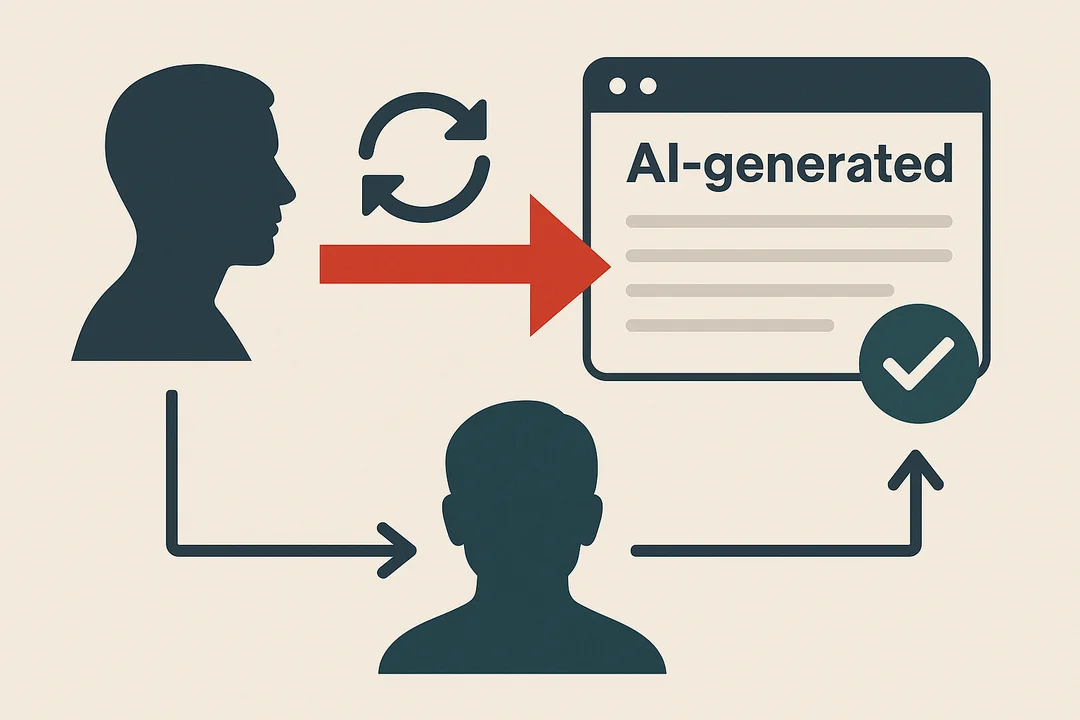
It has been revealed that AI text detectors operate unfairly against non-native (non-English mother tongue) writers — raising alarms in educational settings and global communities. AI detection technology, contrary to its purpose of fair assessment and academic integrity, is producing "unjust victims" while ignoring linguistic diversity and cultural backgrounds.
According to "GPT detectors are biased against non-native English writers" (Liang et al. 2023), these detectors had far higher false positive rates for non-native English writers than natives. Most AI detectors analyze "statistical patterns of text" to classify human-written vs AI-written. GPT-type LLMs tend to generate simpler, more repetitive text with fewer grammar errors. However, non-native English writers also show simple sentence structures, repetition, and limited vocabulary compared to natives — giving AI detectors a very high probability of incorrectly judging these as "AI-written text." Stanford/UC Berkeley research team experiments found representative AI detectors classified 61% of non-native English learner essays as AI-written, while native essays showed less than 10% false positive rates.
Some universities have automatically assigned F grades or initiated disciplinary procedures based solely on detector results — severely infringing student rights. The false positive problem is not merely "reduced accuracy" but connects to non-native students'' right to education/evaluation and even racial equity. Experts warn that "AI detectors are amplifying educational inequality" and that the perception "AI detector result = absolute truth" is dangerous. As GPT detectors commercially proliferate without improvements for false positive/bias issues, they can create a new form of "educational injustice." Recommendations: multi-dimensional evaluation (oral Q&A, process-based evidence, verbal presentations alongside detector results); policy guidelines preventing automatic disciplinary procedures from single AI judgments, ensuring teacher-student dialogue; additional protections for vulnerable groups (appeals, secondary review); international conventions and ethics guidelines preventing writing "quality and creativity" evaluation criteria from excluding linguistic minorities. AI detectors must abandon the illusion of "technical neutrality" and directly face real-world diversity and inequality — what''s needed now is fundamental innovation in assessment and education systems guaranteeing fairness and inclusivity, not just "detector performance improvement."