Ruling and Opposition Parties Expect AI Basic Act to Pass Plenary Session on the 26th
[Korean article] 여야, AI 기본법 26일 본회의 처리 전망
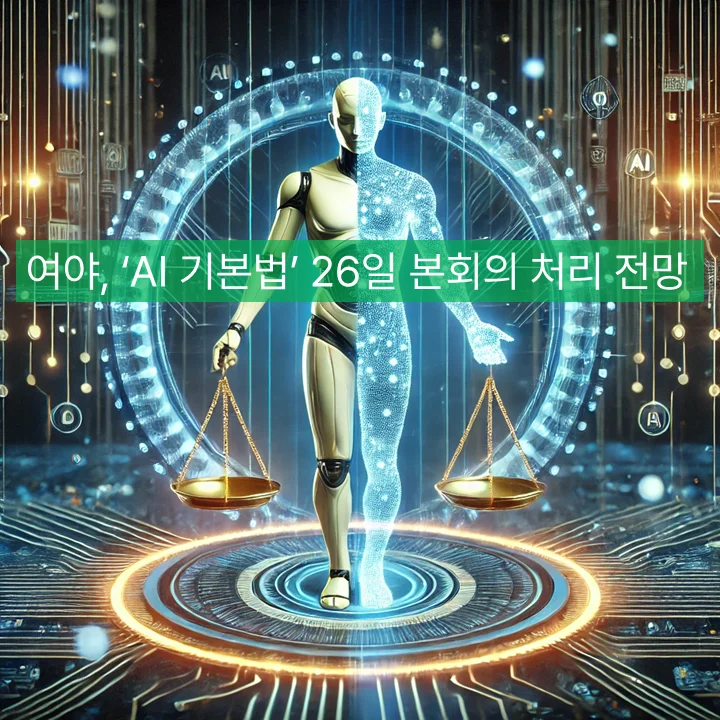
Source: META-X metax.kr
The AI Basic Act for promoting AI industry development and creating a trust foundation is expected to pass the National Assembly plenary session on the 26th. PPP and DP policy chairs agreed at a working meeting on the 24th. The AI Basic Act passed the Judiciary Committee review on the 17th -- integrating 19 legislative bills submitted by multiple representatives. The AI Basic Act includes definitions for artificial intelligence, high-impact AI, generative AI, AI ethics, and AI business operators. High-impact AI is defined as AI systems that may have significant impact on or pose risks to human life, physical safety, and fundamental rights. Key provisions: Government must establish national AI basic plans every 3 years; AI Business Operators must disclose information about their AI systems; High-impact AI operators must conduct conformity assessments before deployment; AI Ethics Committee established under the Prime Minister; protection measures for AI-generated content rights; support for AI startups through government procurement preferences. The significance: Korea becomes one of the first countries to pass comprehensive AI legislation after the EU AI Act; the high-impact AI framework is more practically implementable than the EU approach; bipartisan passage reflects recognition that AI governance is a national security and economic competitiveness issue beyond partisan lines; the Act creates regulatory certainty that will accelerate responsible AI investment by Korean enterprises.
ⓒ META-X metax.kr
All rights reserved.
Free to share with attribution.
All rights reserved.
Free to share with attribution.