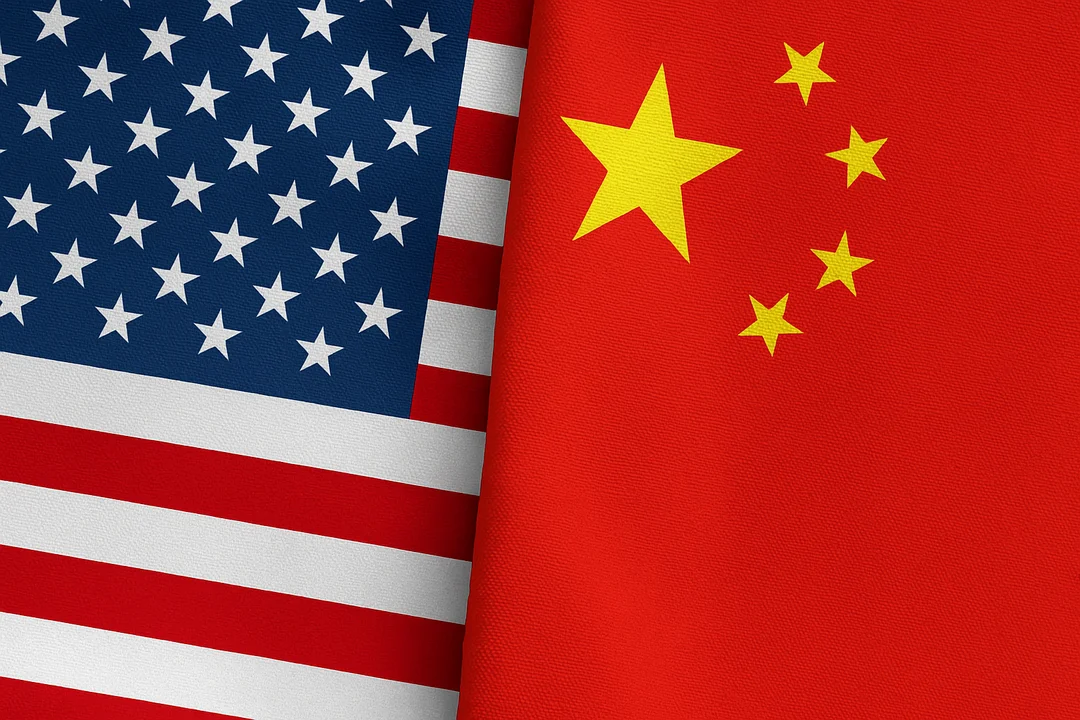
Former US President Donald Trump declared 100% tariffs on all Chinese imports, directly confronting China''s rare earth export restrictions. This is interpreted not as a simple trade dispute but as a "strategic resource war" that will determine AI hegemony competition. The first link in the supply chain connecting rare earths → semiconductors → AI chips → models is shaking.
China''s rare earth regulations are not simple export controls. Rare earths are essential materials for advanced industries including AI chips, EV batteries, semiconductors, radar, and solar power — controlling their flow means seizing control of the AI industry ecosystem''s raw material supply chain. China holds over 90% of global market share in this domain. The US lacks rare earth refining technology, making it absolutely dependent on China for processing and manufacturing. AI semiconductor companies (NVIDIA, AMD) and EV companies (Tesla, Rivian) face component supply uncertainty. Market reaction was immediate: Dow –1.9%, S&P500 –2.7%, Nasdaq –3.6%, NVIDIA/Tesla –5%.
China''s rare earth restriction signals the opening of Resource War — the first round of the AI semiconductor war. Trump''s parallel "software export controls" reflect treating AI algorithms, data, and models as strategic assets. US strategy: fostering domestic mineral refining and recycling industries (MP Materials, Lynas); "AI Supply Chain NATO" concept strengthening tech alliances with Korea, Japan, Australia; Pentagon-led rare earth stockpiling program ($1B budget). China''s strategy: "strategic asset" designation for rare earths/batteries/solar raw materials; AI chip self-sufficiency improvement (Huawei Ascend, Baidu Kunlun); resource solidarity with Global South nations. For Korea: as a center of semiconductor and secondary battery industries at the "intersection" of the AI supply chain, securing rare earth alternatives, recycling, and eco-friendly mining technology is essential for national security. This is not merely a trade dispute but "the opening act of a new strategic competition." AI hegemony competition is not about algorithm superiority but about who controls the physical foundation — minerals, chips, power, supply chains — to run those algorithms.