Humans Moving from Makers to Designers of Standards and Order
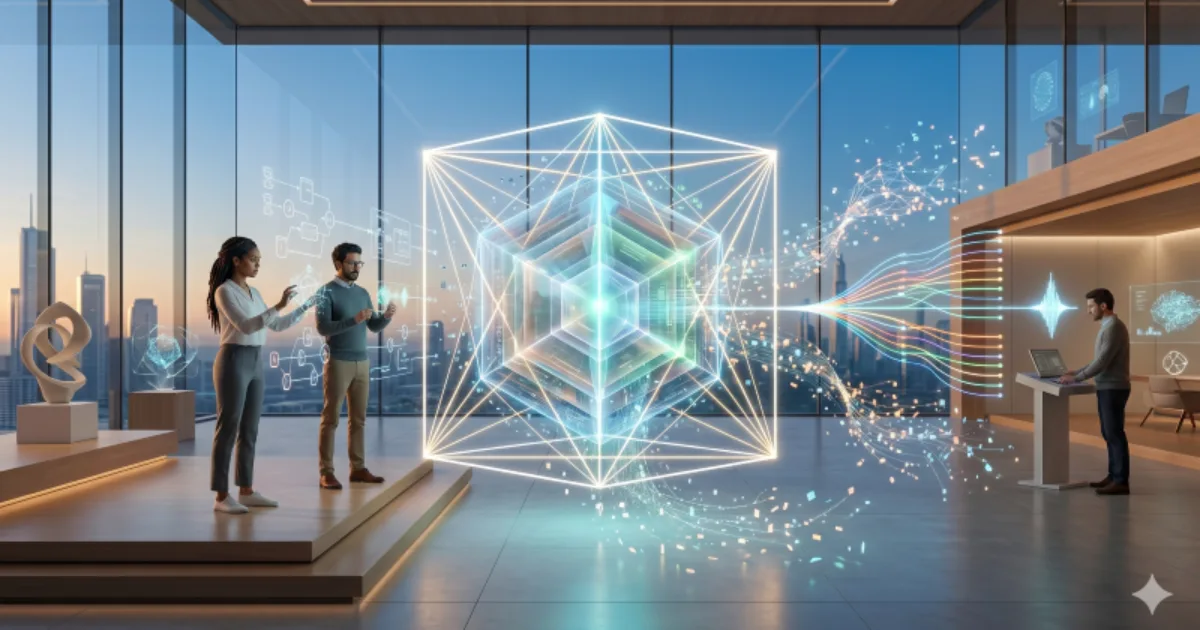
The media industry is entering a phase where production subjects themselves change. Autonomous media production — where AI operates the entire content production system — differs fundamentally from generative AI assistance. While existing AI-based production has humans input prompts and AI generates drafts for human review and publication, in autonomous media AI detects trends, selects topics, plans formats, generates multi-modal content, performs editing and version differentiation, auto-distributes with platform optimization, and adjusts subsequent strategy from response data. Three converging technological flows enable this: (1) multimodal generative AI across text/image/voice/video/music; (2) agent technology that sets goals, calls tools, and iteratively improves; (3) platform data and optimization automation providing real-time click rates, viewing duration, and conversion data. This structurally lowers unit content costs, enables small organizations to operate at large-organization scale, and makes hyper-personalized media real. However, risks include: automation of misinformation (errors spreading at production speed), complex copyright/source issues in high-volume generation, and algorithmization of editorial rights (media tilting toward click-rates rather than public interest). The critical principle transition: from Human-in-the-Loop to Human-on-the-Loop — maintaining human review at minimum for high-risk topics. Going forward, humans are recalled not as simple producers but as beings designing media ethics and editorial order. In an era of automatic content production, what may be truly scarce is not technology but judgment.