Limits of Consumer Damage Compensation and Demands for Enhanced Regulation
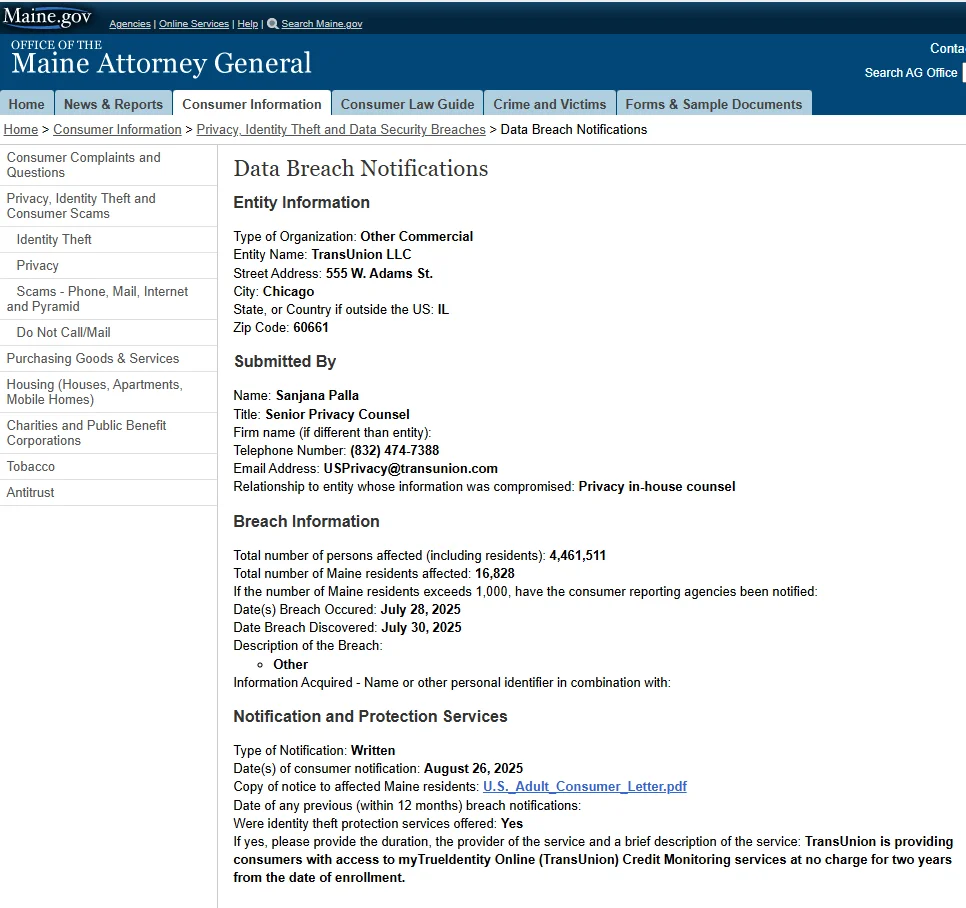
TransUnion LLC, one of the three major US credit bureaus, officially confirmed a large-scale personal information breach. According to materials submitted to US federal and state governments, total affected individuals are 4,461,511 — including 16,828 Maine residents. The breach occurred July 28, 2025 and was detected through internal security monitoring systems on July 30. Leaked information includes names combined with other sensitive personal identifiers. Written notification was completed to victims on August 26.
TransUnion announced free provision of myTrueIdentity Online credit monitoring for 2 years from registration — covering credit score change monitoring, suspicious transaction detection, and identity theft prevention services with up to $1M insurance. However, cybersecurity experts emphasize that "leaked information can still be traded on the dark web even after the 2-year protection period ends," calling for long-term credit monitoring and government-level security regulation strengthening.
This incident at an institution handling the most sensitive financial information raises questions about insufficiently improved industry-wide security since the 2017 Equifax breach (147M Americans affected, $700M settlement, then-largest-ever data breach). Similar major incidents have continued: Capital One hack (2019, 100M affected), SolarWinds hack (2020), TransUnion South Africa subsidiary breach (2022, 50M records). Criticism persists that despite regulatory strengthening, companies'' fundamental security investment will remains insufficient — security system construction requires massive costs with no direct revenue connection, making investment fall behind in priority.
Consumer damage compensation limits and regulatory demands: free monitoring is merely a short-term measure; long-term damage (financial fraud, identity theft) may fall to individuals. FTC and state governments are discussing data security regulation strengthening, but criticism of insufficient security investment will among private credit bureaus persists. This case again highlights that "data is financial assets" across the global credit information industry, reveals structural risks as credit bureaus become hacking targets, and demonstrates the necessity for international financial security cooperation.