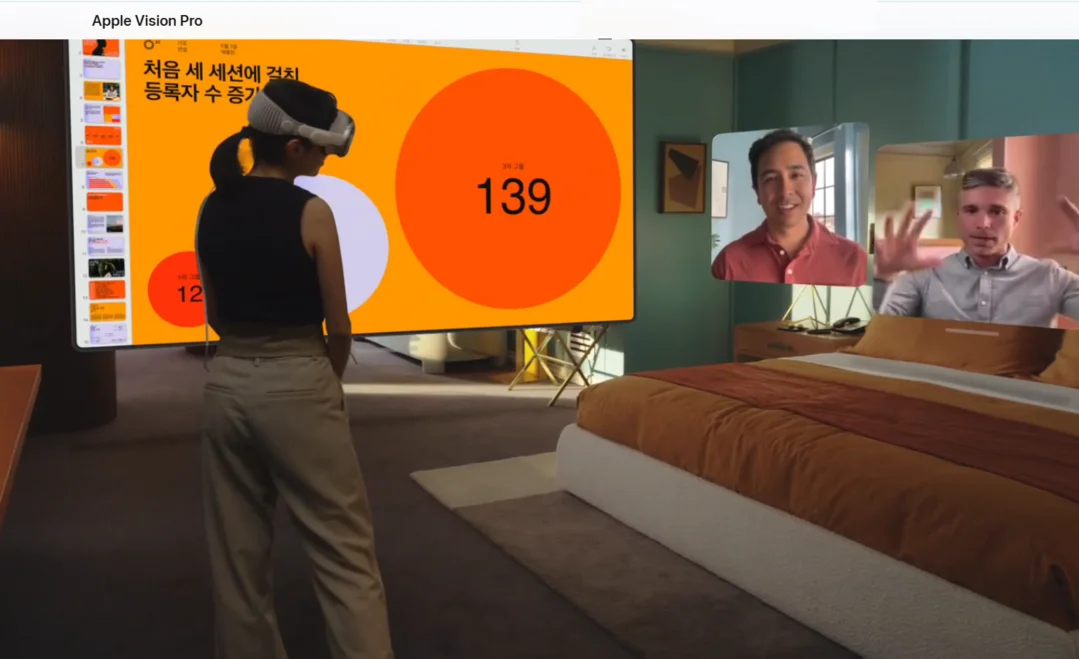
Apple is reportedly pausing development of Vision Pro successors and betting on AI-based smart glasses. While the company had been preparing a follow-up mixed reality headset, that plan is effectively on hold — instead, Apple is concentrating core personnel on AI-based smart glasses development, with a 2027 release target.
According to Bloomberg, Apple is developing two versions: Code-named "N50" with no self-display, linking with iPhone (expected preview in 2026, formal release 2027); and a premium model with self-display, likely competing directly with Meta''s Ray-Ban Display (originally targeting 2028, but development acceleration is being observed).
This strategic shift goes beyond a simple product roadmap change. Vision Pro succeeded in providing immersive experiences but had limitations for mass adoption due to high price, weight, and limited usability. Smart glasses, by contrast, offer advantages of being lightweight, natural to wear, and able to integrate into daily life — real-time translation, personal assistant functions, and notification display based on AI. The potential to become a new platform transforming life overall like iPhone comes from here. XR market expected to grow to approximately $490B by 2030, with wearables and AI combination the fastest growing segment anticipated over the next decade.
However, challenges are considerable. Apple is a latecomer compared to Meta (first smart glasses in 2021, continuously improved since) and Google (strengthening AR navigation). Meta''s recent products combining AI voice assistant and display features are leading the market. How Apple provides differentiated experiences compared to these competitors is the key observation point. Smart glasses have the potential to become not just auxiliary devices but personalized AI assistants and AR platforms over the next 5-10 years. 2027 is expected to be an important inflection point in the AI smart glasses market — Apple has definitively shifted from simple VR devices to targeting the future of AI wearables.