Games Are Ultimately Play, the Power of Nintendo That Redefined the Essence of Play
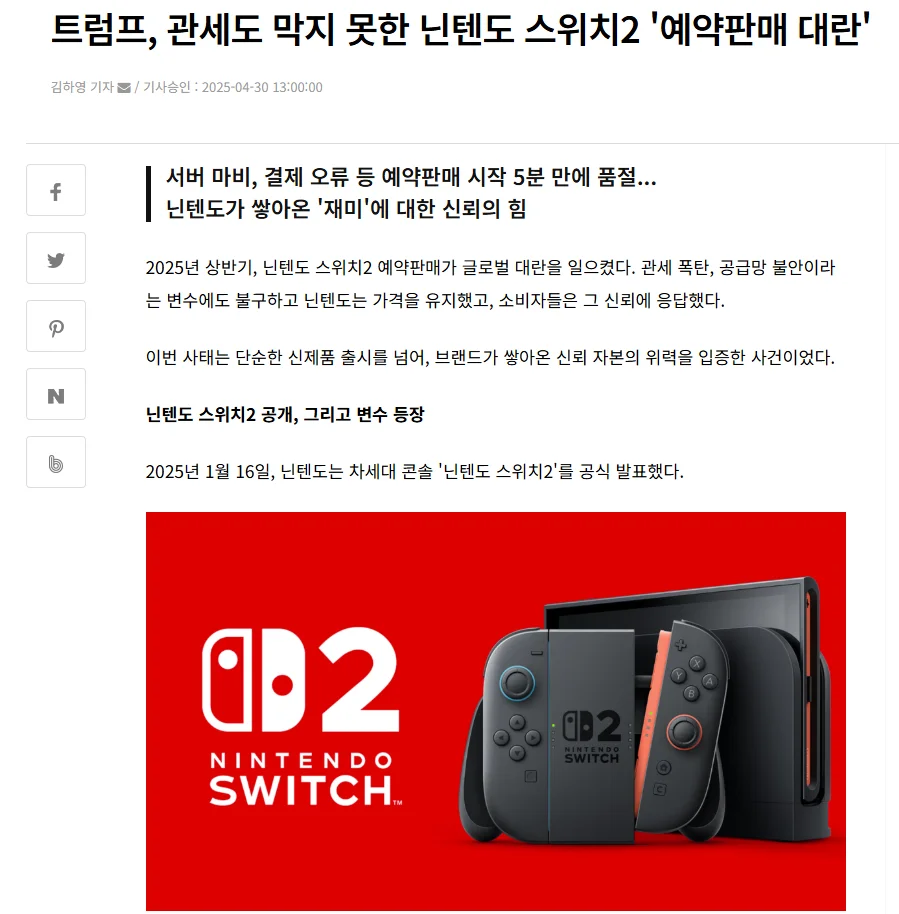
Nintendo announced Switch 2 in early 2025, initially facing uncertainty from US tariff policies — industry consensus was that Nintendo would have to raise prices. Instead, Nintendo launched at original price without increases, triggering an immediate sell-out: major US retailer websites crashed within seconds of pre-order opening; all models sold out in minutes; pre-order rights were trading at premiums on secondary markets. Despite the triple challenge of tariffs, supply chain uncertainty, and server overload, Nintendo converted crisis into opportunity through brand trust. Nintendo's history: founded 1889 by Fusajiro Yamauchi as Yamauchi Nintendo (playing card manufacturer); first Western-style cards in 1902; mass production by 1907; plastic playing cards in 1953; Disney character licensing in 1959. Game pivot: 1970 Gunpei Yokoi hired (later invented Game & Watch, Game Boy); 1977 Color TV-Game; 1980 Game & Watch portable LCD games; 1983 Famicom; 1985 Super Mario Bros.; 1989 Game Boy; 1996 N64 + Super Mario 64 (3D gaming revolution); 2004 DS; 2006 Wii (motion controls); 2011 3DS; 2017 Switch (hybrid console-portable). Nintendo's enduring philosophy: "Play value" over technical specifications — consistently choosing unique interaction mechanics (motion control, dual screens, portability) over competing on raw hardware power; "entertainment for everyone" rather than "entertainment for enthusiasts." Switch 2 pre-launch analysis: Nintendo Switch sold 143.42M units (2017-2025), the 4th best-selling gaming platform ever; Switch 2's backwards compatibility, enhanced performance, and mouse-click Joy-Con features position it to replicate or exceed Switch's success.