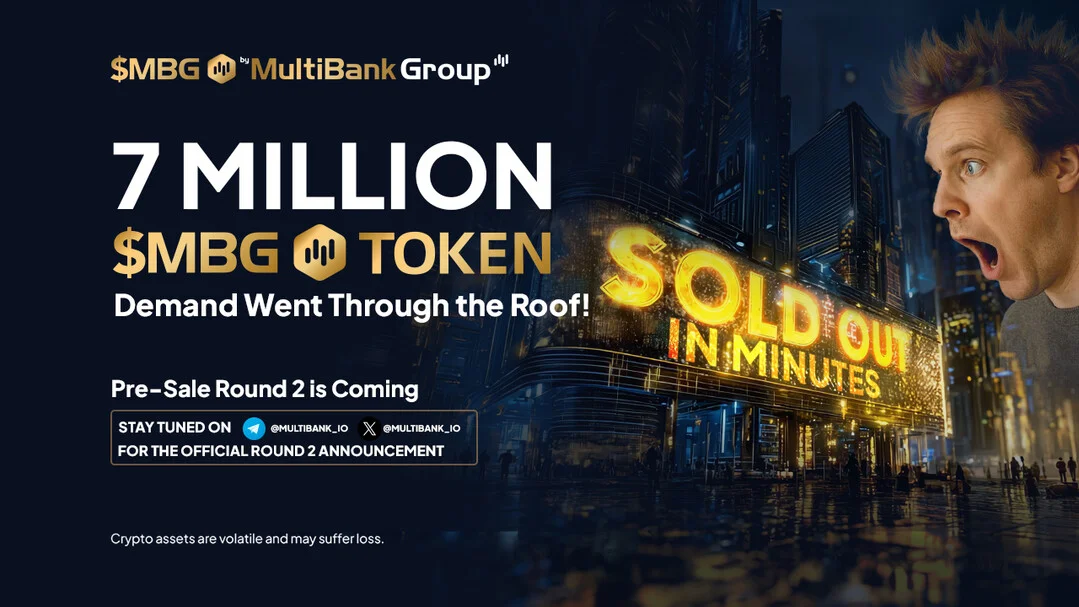
In July 2025, MultiBank Group's $MBG token sold out all 7 million tokens in presale within one hour. On the surface this appears to be evidence of "market trust" and the "asset-based token boom," but beneath the surface coexist structural changes in the digital asset market alongside persistent limitations and risks.
The sellout combined limited supply of 7 million tokens, a low entry price of $0.35, and "scarcity" marketing effects — a commonly used success formula in the market, but one that must be interpreted separately from the token's intrinsic value. Investor participation was complexly driven by MultiBank Group's global brand and regulatory history, alongside the recent RWA (Real World Asset) tokenization trend.
The fundamental question of RWA tokens is: "Does the token actually connect to real asset returns and value?" MBG token emphasizes four real business foundations (traditional finance, institutional exchange, ultra-luxury real estate, crypto derivatives), with the group's large assets, revenue, and regulatory licenses functioning as a "trust premium." But how far holders can access asset/profit distribution structures varies by disclosure level. Global regulators (SEC, ESMA, etc.) are also indicating regulatory positions toward "strengthening transparency of disclosures, oversight, and fund flows" for RWA tokens.
Lesson from LUNA and similar cases: "internal policies" alone cannot permanently guarantee market trust. Buyback and token burn policies promise long-term value defense, but "whether promised supply reduction policies are actually executed" and "how transparently the token's circulation and buyback structure are disclosed" are core variables determining trust medium-to-long term. RWA tokenization is showing growth with global institutions like BlackRock and JP Morgan entering, but the market remains in an early experimental stage with repeated trials and adjustments in "connectivity to real assets," "liquidity," and "regulatory compliance." True success depends not on speed and marketing but on how the structural conditions of real value linkage, transparent information disclosure, and regulatory/investor protection actually function. Both investors and the industry need to view the market through the long-horizon perspective of "intrinsic value and sustainability" rather than "sellout" itself.