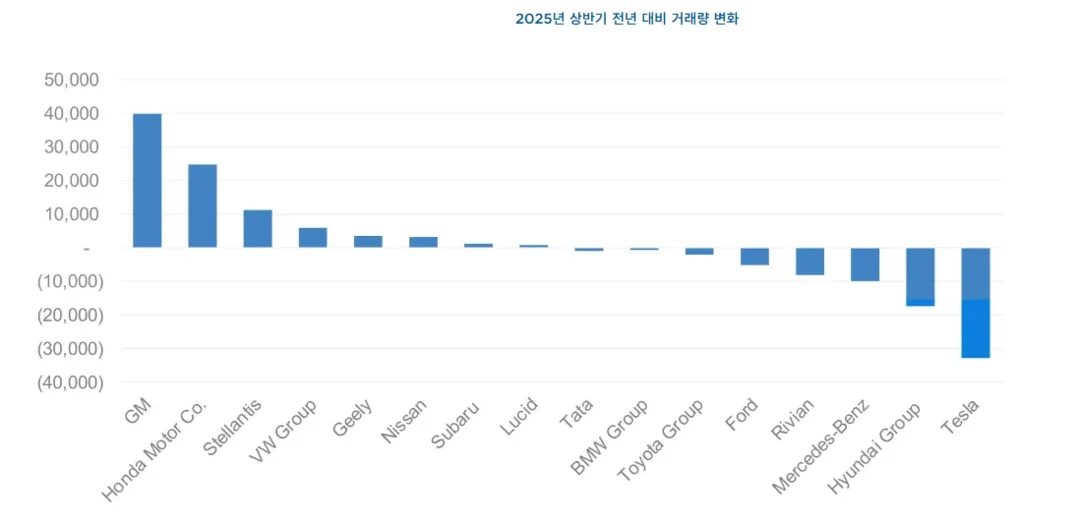
In H1 2025, a clear tectonic shift is occurring in the US electric vehicle (EV) market, centered on GM''s advancement and Tesla''s growth slowdown. According to Kelley Blue Book (a Cox Automotive subsidiary), GM sold over 78,000 EVs in H1 — more than doubling year-over-year growth — with EV market share surging to 12.9%, firmly establishing itself as the US''s #2 EV brand. Chevrolet surpassed Ford and Hyundai by end of H1 to become the second-most-sold EV brand in the US. This advancement shows that traditional automakers are also rapidly adapting to the EV era.
Conversely, Tesla — which once overwhelmingly dominated the US EV market — has been retreating in 2025. Q2 Tesla''s US sales declined over 12% year-over-year. Market share fell 6 percentage points year-over-year to 44.7%, and overall auto market share decreased to 3.4%. This clearly shows that EV market dominance is gradually dismantling. US EV market competition no longer resembles a one-way dominance by one company — GM, Ford, Hyundai, and various new brands are entering competition, thoroughly reshaping the EV market into a "multi-competitor" structure. Chevrolet surpassed Ford and Hyundai to rise to 2nd place, with traditional automakers actively expanding market share leveraging new vehicle effects. Tesla faces various challenges: price competition, new vehicle delays, brand fatigue, and competitor pursuit.
In 2025, the US EV market shows GM and Tesla''s contrasting fortunes — Tesla''s solo dominance era is waning and a new chapter of "multi-party competition" is opening. Industry attention focuses on which company will take market leadership next and how consumer choices will change.