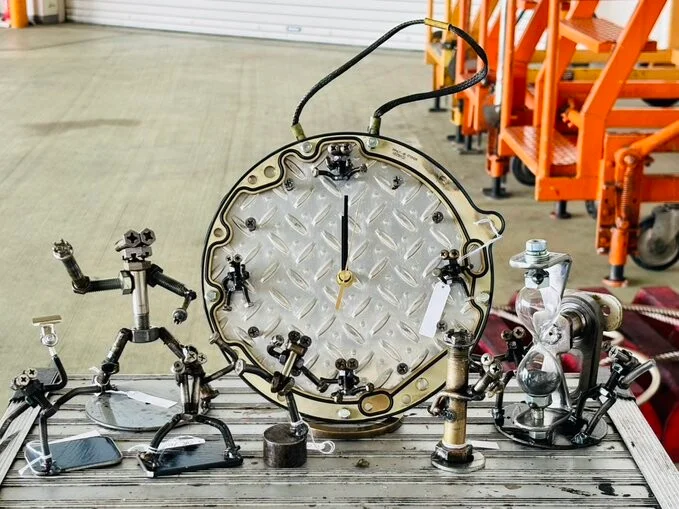
Regional airline Fuji Dream Airlines (FDA, headquartered in Shizuoka) has transformed bolts and nuts from retired aircraft into art products including hourglasses, airplane models, and figures. Conducted in partnership with a neighborhood factory in Aichi Prefecture, this project attracts attention for combining waste material utilization with local manufacturing technology.
The upcycling targets FDA Flight 4, retired in March 2024, producing 19 types of products: hourglasses, airplane models, phone stands, wall clocks, and humanoid figures "Bolt Man" — priced between 4,000 and 30,000 yen. Tomoda Industries in Yatomi City, Aichi Prefecture participated in production, with craftsmen using cutting and welding techniques. Sales are through FDA''s official online store.
FDA chose creative recycling (upcycling) rather than discarding most retired aircraft parts, reducing environmental burden while enhancing brand value. Previous upcycling included transforming old crew uniforms into teddy bears and expired life vests into pouches. This project targets metal components as art objects, simultaneously appealing to aviation fans'' collecting desires and eco-friendly values.
Social and economic significance: collaboration highlights local small manufacturers'' precision machining and welding skills, creating "one-of-a-kind products." The aviation-neighborhood factory partnership reexamines local industry and artisan skills. "Products with stories" provide special value to environmentally conscious consumers. For a regional airline heavily dependent on aviation revenue, upcycled goods represent a new revenue model connecting transportation services and manufacturing. Future expansion to cabin equipment and engine components for domestic and international aviation fan markets is anticipated, though the artisan handcraft-centered production approach has inherent scale limitations.