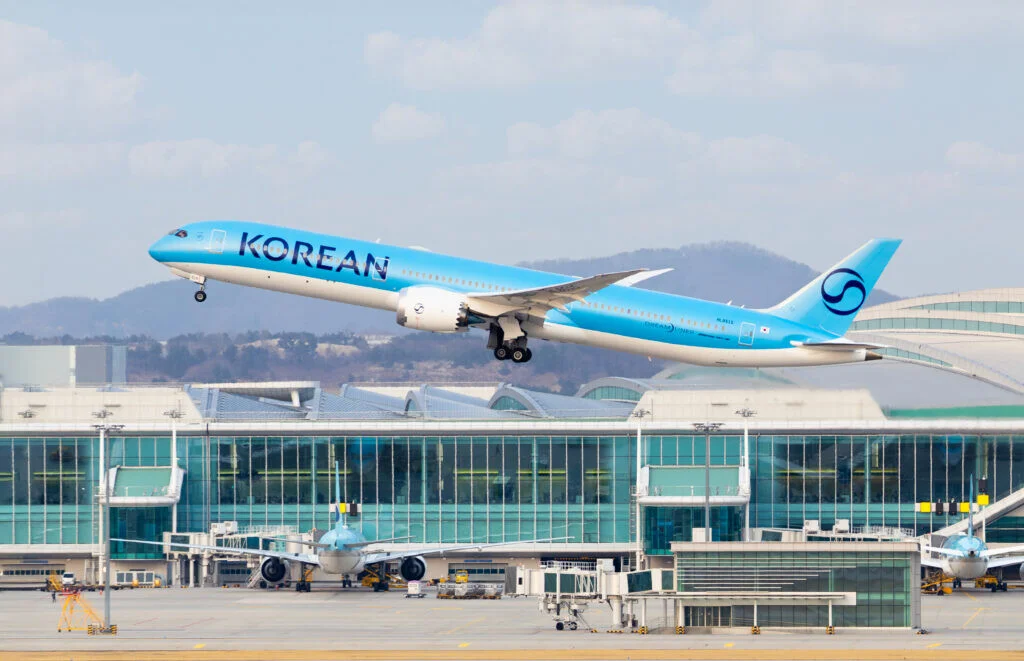
Korean Air Initiates ''Seating Arrangement Review'' Amid Seat Reduction Controversy
Korean Air''s economy seat arrangement (3-4-3) on Boeing 777 long-haul routes is at the center of controversy. The airline cites seat efficiency and profitability, but passengers report "reduced space and increased fatigue." Industry sources indicate Korean Air has begun reviewing seating arrangements in response to the "seat reduction controversy," considering brand value and long-haul route competitiveness.
Background for 3-4-3 Introduction
Korean Air changed economy seats on Boeing 777-300ER and certain models from 3-3-3 to 3-4-3 to carry more passengers per flight. The Boeing 777 originally had 3-3-3 as standard, but recently global airlines have been adopting 3-4-3 for revenue maximization. Korean Air''s choice was to remain competitive with rival airlines.
Airline economic logic: one additional seat per row means dozens of additional seats on long-haul routes — tens of millions of dollars in annual revenue difference; lower cost per available seat mile (CASM) enhances price competitiveness; Emirates, Air France, American Airlines have already adopted 3-4-3. Passenger experience deterioration: seat width reduced from ~18-18.5 inches to ~17 inches; narrower shoulder space increases fatigue on 10+ hour flights; complaints that "fares are still premium but seats are no different from LCCs."
Comparative approaches: Emirates operates 777 with 3-4-3 but offsets discomfort with enhanced service and entertainment. ANA and JAL maintain 3-3-3, using "wider economy" as a differentiation strategy. Delta introduced 3-4-3 but added Premium Economy to partially address discomfort. Korean Air faces the risk of adverse effects if competitors use "wider economy" as a differentiator. Long-term variables include AI-based customized seating allocation, and carbon regulation-driven seating efficiency adjustments. This controversy shows the classic dilemma between profitability and passenger experience — the fundamental question of "quantity of passengers vs. quality of experience for each passenger."