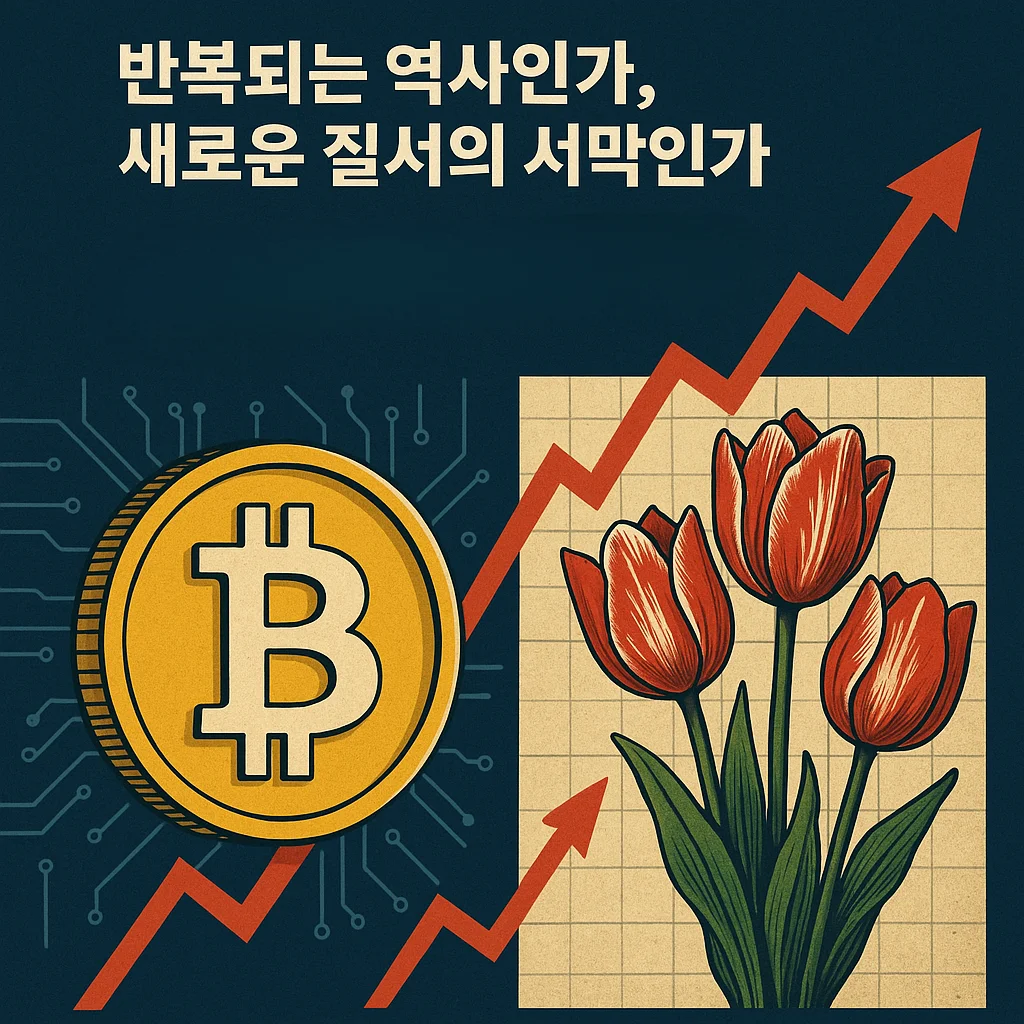
Bitcoin couldn't escape the label "modern-day tulip bubble" from its emergence. Like the 17th-century Dutch tulip speculation craze, it repeatedly surged and crashed, becoming the center of "manic asset" analogies. But the question deserves asking: is this comparison justified? Are tulips and blockchain on the same trajectory?
The tulip bubble (1630s): During Dutch commercial golden age, tulip bulbs infected with "Tulip Breaking Virus" produced unpredictable striped patterns, mistaken for rare natural art. The "Semper Augustus" variety traded at 5,500 florins per bulb — more expensive than an Amsterdam canal house (approximately 3,000 florins). In February 1637, a single failed auction in Haarlem triggered a collapse — prices fell 90%+ within days, leaving the market in panic. This became history's first documented large-scale asset bubble collapse, the "Tulip Mania."
Bitcoin vs. tulips — key differences: Tulips were physical assets with use value limited to ornamental consumption, capable of natural reproduction (destroying scarcity). Bitcoin, while having no physical form, contains technical and economic structures: blockchain (transparent distributed ledger preventing tampering), fixed supply of 21 million coins (stricter scarcity than gold), P2P transactions without third parties, censorship resistance, cross-border transfers. Expert perspectives: Berkeley economic history professor Alejandro Reyes: "Tulips were temporary cultural enthusiasm; Bitcoin is technology-based systemic transformation." IMF 2021 Global Financial Stability Report: blockchain-based digital assets "possess structural foundations that could function as cross-border financial infrastructure." Nobel laureate Paul Krugman: "Bitcoin produces nothing and is essentially a fear-based speculative structure — price is maintained by belief but belief can rapidly collapse." The 2024 SEC approval of Bitcoin spot ETFs signaled institutional entry. Key challenges: extreme price volatility, mining energy consumption, regulatory uncertainty, technological uncertainty. "Bitcoin is not yet 'gold,' but contains the possibility of becoming the future currency that gold could never be — a digital native language, symbol of self-determination, uncensored money, freedom tool built on technological trust."