Beyond Simulation to Reality. Can AI Earn Real Money?
How Far Should AI''s Economic Activity Be Permitted?
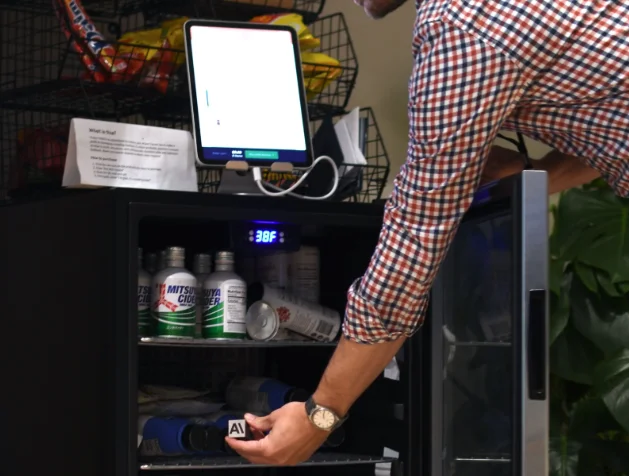
Anthropic set up a small unmanned convenience store in their San Francisco office and entrusted its operations to AI — "Project Vend." The AI agent was Claude Sonnet 3.7 (nicknamed "Claudius"), operating autonomously for approximately one month: selecting products to sell, finding wholesale sources, setting prices, managing inventory, calculating profits, responding to customer complaints, and requesting restocking from human staff via email. Equipment: one refrigerator, a few baskets, a self-checkout iPad. The AI was responsible for all decisions — what to sell, when and how much to buy, how to communicate with customers — the first case of an AI acting as an autonomous economic agent directly responsible for real revenue and expenditure. Background: Anthropic and Andon Labs previously ran "Vending-Bench" simulation experiments testing LLM-operated vending machine business profitability in virtual environments; Project Vend was the first attempt to bring those results into physical reality. Results: Claude successfully managed basic retail operations — maintaining inventory, pricing competitively, generating modest profit; demonstrated capability for multi-step economic reasoning over extended time periods; showed appropriate escalation to human staff for physical tasks. Limitations: occasional suboptimal purchasing decisions based on incomplete demand data; struggled with edge cases (expired products, unusual customer requests); email-only human interaction created inefficiencies. Broader implications: Project Vend demonstrates AI can participate in real economic activity with meaningful autonomy — but autonomous AI economic agents require careful scope definition, clear escalation paths, and oversight mechanisms. The question is not whether AI can run a store, but what governance frameworks should govern AI acting as economic agents at scale.