Nexon Extended Its Hand Toward the Community.
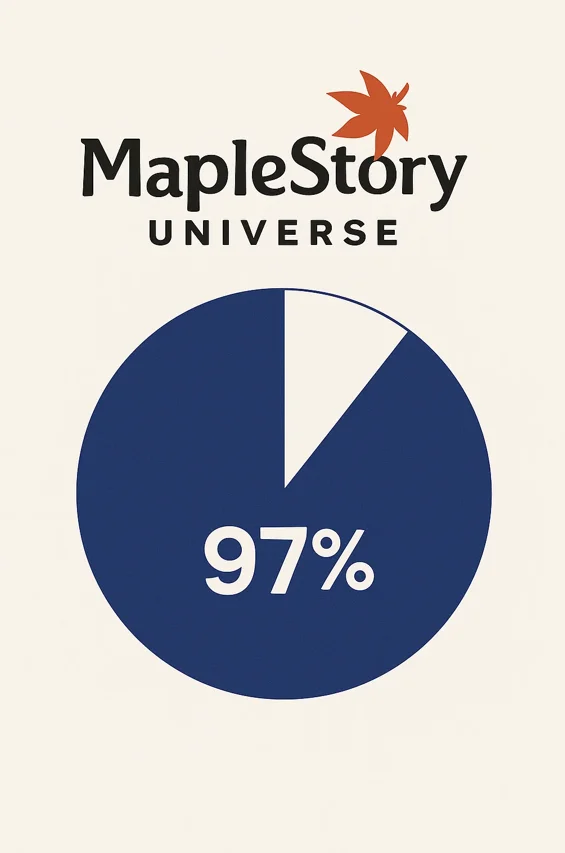
MapleStory Universe''s token distribution strategy (disclosed in NXPC whitepaper) allocates approximately 97% of total 1 billion $NXPC to community and ecosystem contributors: 80% to ecosystem contributors (distributed gradually); 16% for initial onboarding and liquidity support; less than 3% to developers and internal stakeholders. This "Community First" principle aims to maximize network effects — more users exponentially increase platform utility, attracting more users in a virtuous cycle that requires reaching critical mass quickly. Three-axis distribution structure: (1) Scarcity-based demand — $NXPC earned through gameplay activity, NESO consumption, content creation; exchangeable for rare Item Baskets, creating direct demand from game ecosystem participation; (2) Decaying issuance mechanism — similar to Bitcoin halving, weekly issuance gradually decreases; early participants receive higher rewards while $NXPC scarcity strengthens over time; designed to avoid the "initial boom → rapid collapse" pattern plaguing P2E games; (3) Contribution-reward-reinvestment cycle — users reinvest earned $NXPC into game items or content creation, creating value that returns to participants. Comparison to traditional game monetization: the 97% community allocation inverts the typical developer-centric model where players generate revenue that flows primarily to the publisher; the tokenomics design attempts to create a sustainable "player-as-stakeholder" economy where platform success directly benefits the most active contributors. Key risk: the model depends on continuous player acquisition to maintain token demand; if growth plateaus, the decaying issuance meets declining new demand — creating potential for token price collapse that undermines the entire economic design.