Medical Data Concerns About Being Misused for Financial Fraud and Other Crimes
Revealed Structural Vulnerabilities of the Entire Medical Industry
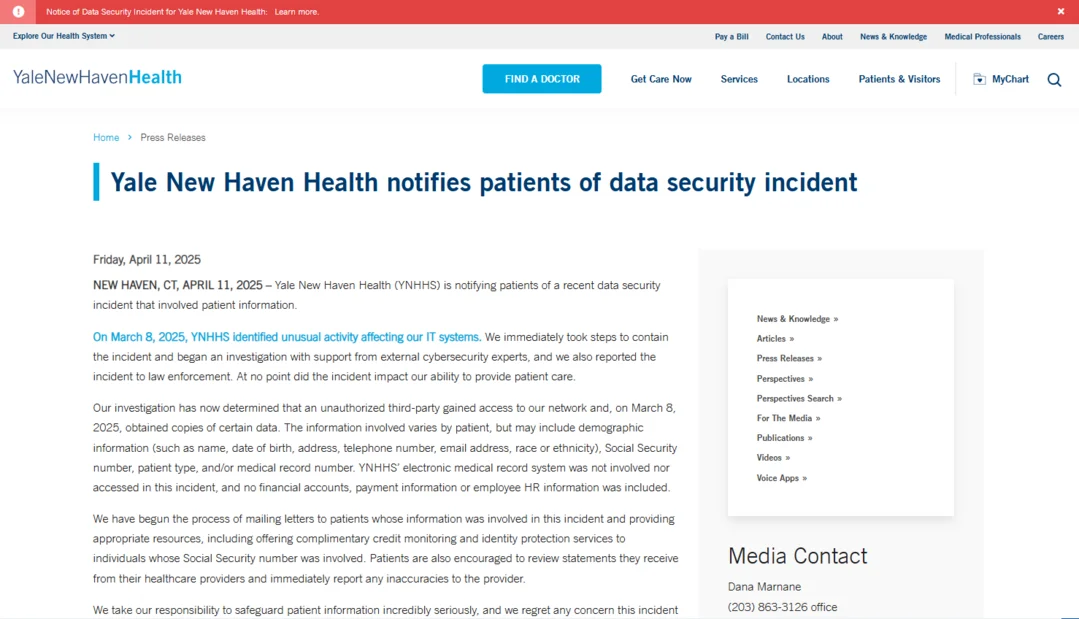
Yale New Haven Health (YNHHS), Connecticut largest medical institution and major healthcare organization in the New England region, officially acknowledged a large-scale personal information breach affecting 5.5 million+ patients. This incident reveals cybersecurity vulnerabilities prevalent in the US medical system and awakens awareness of the importance of medical data protection. The breach details: attackers gained access to patient records containing name, date of birth, address, phone number, email, race/ethnicity, Social Security Number (for some patients), and patient type (emergency, inpatient, outpatient); critically, financial account information and medical records (diagnoses, treatments) were reportedly not accessed -- but SSN exposure is the most serious element. Why medical data is particularly valuable: medical records contain the most comprehensive personal information of any data category; unlike credit card numbers that can be changed, medical identifiers (SSN, date of birth, address combination) cannot be changed; medical identity theft enables: fraudulent insurance claims, prescription drug fraud, tax refund fraud using SSN, and long-term identity compromise; the black market value of medical records (50-100 USD per record) exceeds financial records (1-10 USD per record). The structural vulnerability: US healthcare cybersecurity consistently lags financial services despite handling comparably sensitive data; the average healthcare breach costs 10.9 million USD (IBM 2024 Cost of Data Breach Report -- highest of any industry); the cause is historical underinvestment combined with complex legacy IT systems (hospitals run systems from multiple eras simultaneously); HIPAA compliance requirements focus on data handling rules rather than security investment levels.