Meta Ecosystem''s Advertising Expansion Strategy
Threads Is the Last Puzzle Piece
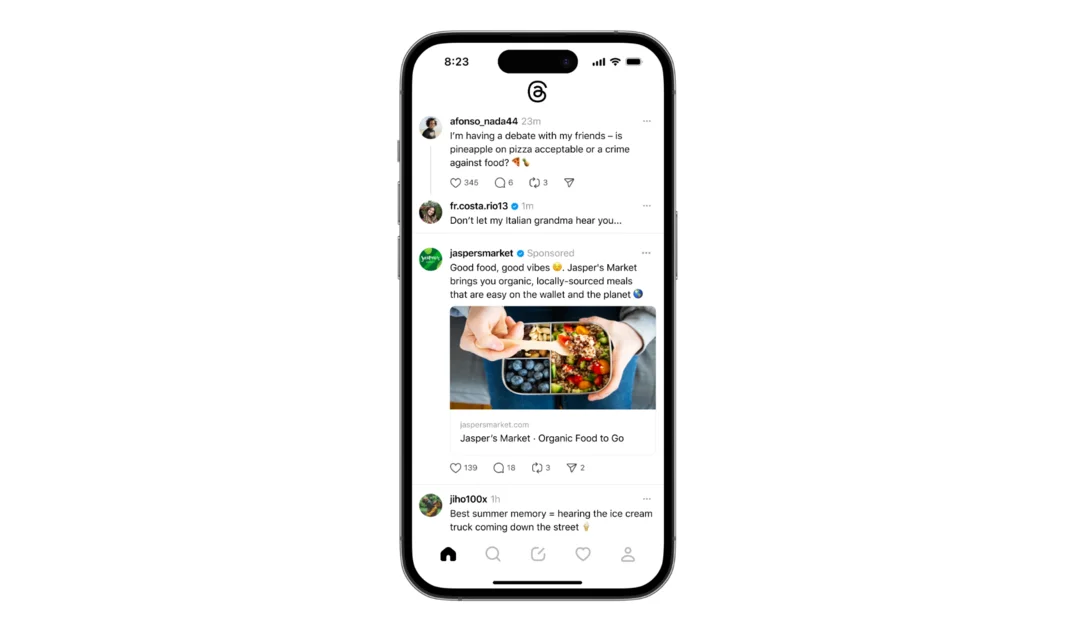
On April 23, 2025, Meta officially announced the introduction of feed ads in Threads for advertisers worldwide. Previously operated cautiously as a pilot test with only a few brands, it will now gradually expand based on performance. Threads currently has 300 million monthly active users (MAU), with 3 in 4 users following at least one brand account — showing Threads has evolved beyond simple SNS into a community platform forming brand-user relationships.
Threads is the last piece of Meta's long-built advertising ecosystem puzzle. Meta has already developed advertising UX across Facebook newsfeed, Instagram stories and Reels, and Marketplace — minimizing user fatigue while improving advertiser performance by blurring the "advertising/non-advertising" boundary. Ads appear in image-based format smoothly woven between user's general posts. Advertisers can manually set exposure positions or use Meta's AI-based optimization system Advantage+ to automatically adjust Threads inclusion. Existing Meta campaigns can be extended to Threads by simply checking one box — no need to create separate creative materials.
User experience design for ad discovery: interest-based targeting (personalized ads based on user posts, follow history, interactions — ads feel like "discovery moments" matching personal style); ad control features (users can hide, skip, or report ads anytime); ad settings management (users can confirm why an ad was shown and what information was used). Brand protection: inventory filters (AI-based content sensitivity analysis blocking ads from appearing next to controversial posts); monetization policy application (same Meta standards as Facebook and Instagram applied in Threads); third-party certified solutions planned for future. "Rather than the romance of an ad-free space, this is a strategy for a sustainable community." Threads is being redesigned as a community-type advertising space where brands and users communicate in real-time — the question: "Can advertising become a 'vehicle of discovery' rather than an annoying interruption?"