Destination of the Data Ecosystem: "Data Combination" Business
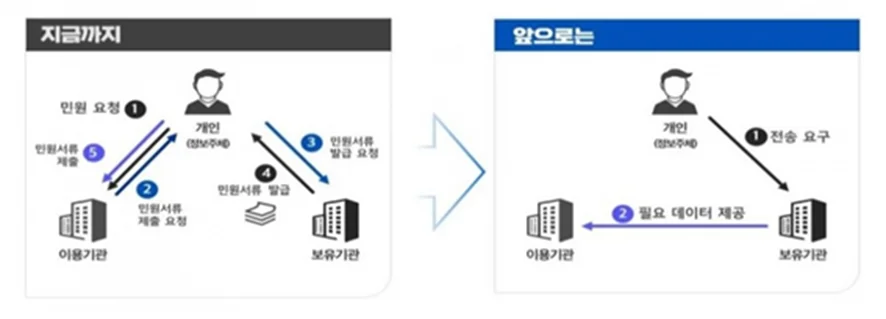
The era where data becomes money has arrived. With the passage of the Data Three Laws in January 2020, data business (BM) in Korea has been formalized in earnest. Data business, just looking at the words, might not seem like much. But in reality, just grasping the concept itself is quite difficult and complex. Even falling into the trap of hasty generalization and setting the wrong business strategy can cause significant damage to your organization. The Data Three Laws: Personal Information Protection Act (PIPA) revision enabling data pseudonymization and combination; Credit Information Act revision enabling MyData financial services; Information and Communications Network Act integration with PIPA for unified framework. MyData definition: a system where individuals have the right to control their personal data and can authorize institutions to share their data with other parties of their choosing; in financial services, this means a consumer can authorize their bank, credit card company, and investment account to share transaction data with a third-party financial planning app. The MyData business model: (1) MyData operator (허가사업자): licensed by the Financial Services Commission to collect and provide individual financial data; receives data from financial institutions through API; provides aggregated financial views and personalized services to consumers; examples: Naver Pay, Kakao Pay, Toss. (2) Data brokerage (데이터 중개): connecting data providers (companies with data) with data users (companies wanting data) without directly holding the data; operates the marketplace infrastructure and manages consent; revenue from transaction fees. (3) Data combination (데이터 결합): combining pseudonymized data from multiple sources to create insights neither source could produce alone; requires government-certified Data Combination Support Institution (결합전문기관); strict regulations on what can be combined and how results can be used. The data combination business complexity: to combine data from Company A and Company B, both must pseudonymize their data; send to a certified Combination Support Institution; the Institution combines and anonymizes; results provided back -- neither company sees the other raw data; this protects privacy while enabling insights (e.g., combining retail purchase data with health data to understand how shopping behavior correlates with wellness without identifying individuals). The Web3.0 dimension: decentralized data ownership (individuals controlling data via blockchain) is the Web3.0 vision for MyData; smart contracts automating data licensing and micropayments; the current MyData regulatory framework is centralized (government-licensed operators) but the long-term trajectory is toward decentralized models where individuals directly monetize their data without intermediary operators.