Global Nuclear Renaissance Triggered by Data Center Power Explosion and US Energy Dominance Return
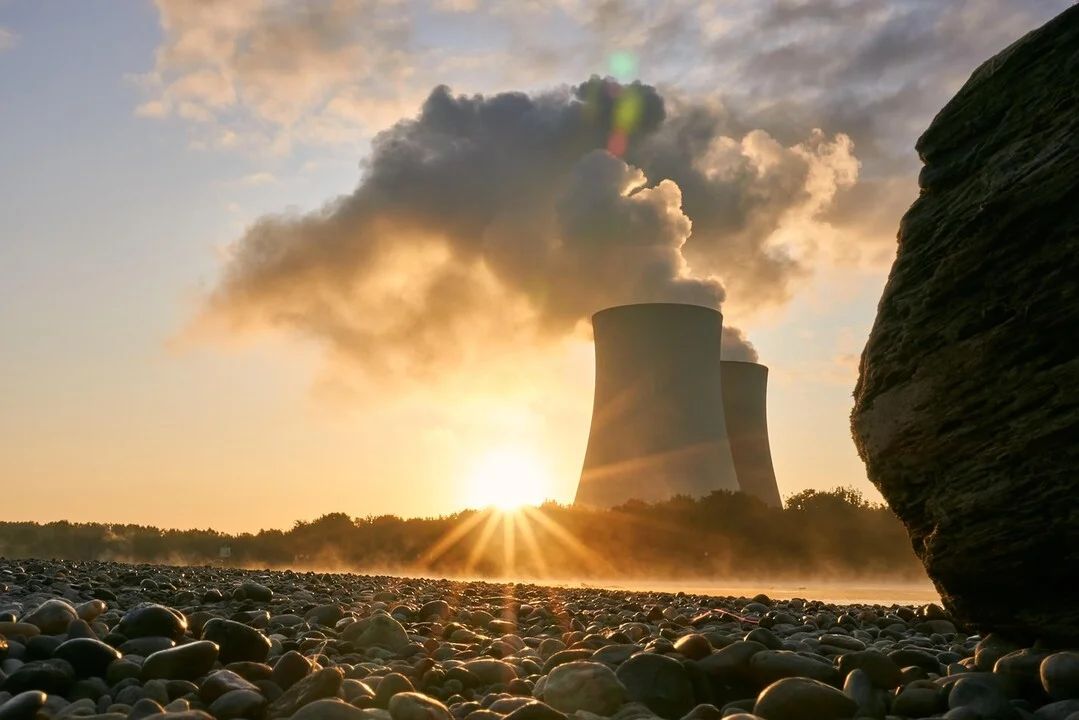
As AI acceleration reshapes key power supply variables, expectations for nuclear reactor restarts and life extensions are surging in Korea. With the US Department of Energy announcing organizational restructuring to return to energy production-centered policy, the global nuclear market is gaining momentum as it re-enters a growth phase.
Korea's data center power demand is projected to increase approximately 4x from 8.2TWh in 2025 to 30TWh by 2038. Total power demand is also estimated to increase from 106GW to 145.6GW in the same period — equivalent to 3-4 large nuclear reactors. As domestic infrastructure expansion requires at least 6-7 years, the increase in AI power demand naturally heightens interest in "large-scale carbon-free power sources that can be secured immediately," making nuclear power — particularly life extension and restart of existing reactors — a realistic option from an energy security perspective.
Korea Hydro & Nuclear Power (KHNP) is executing a three-axis strategy: continued operation of aging reactors, SMR export, and AI-based digital nuclear power introduction. Among Korea's 26 reactors, many are undergoing life extension review — Gori-2, Gori 3 & 4, Hanbit 1 & 2, Hanul 1 & 2. KHNP is also participating in an SMR project to supply nuclear power to US AI data centers through a consortium with X-energy, Doosan Enerbility, and AWS — targeting 960MW by 2039 and over 5GW long-term. Additionally, digital innovation is accelerating internally, developing "nuclear-specialized super-large AI" with Naver Cloud and Bespin Global.
Korea's nuclear export strategy is also evolving — from the existing "large-scale nuclear EPC export" model to SMR export, nuclear fuel supply, digital twin/AI maintenance solutions, O&M export, and "nuclear power packages" for data centers. The AWS-X-energy-KHNP cooperation model demonstrates that Korea can transition to a "nuclear package supplier." However, caution is needed about simplistic "power = nuclear" logic: some experts challenge AI demand projections, and Korea's transmission grid saturation issues mean that even if reactors are built, power cannot be delivered without grid expansion — requiring 10+ years amid local conflicts and environmental regulations.